Build of the week: the mission control desk, in Class80, Godspeed, and Box White
A retro TKL, a steel-blue-and-cream SA set, and a clicky box-stem switch aren't three separate purchases here — they're one decision, made three times, that only works because each part solves a problem the other two create.
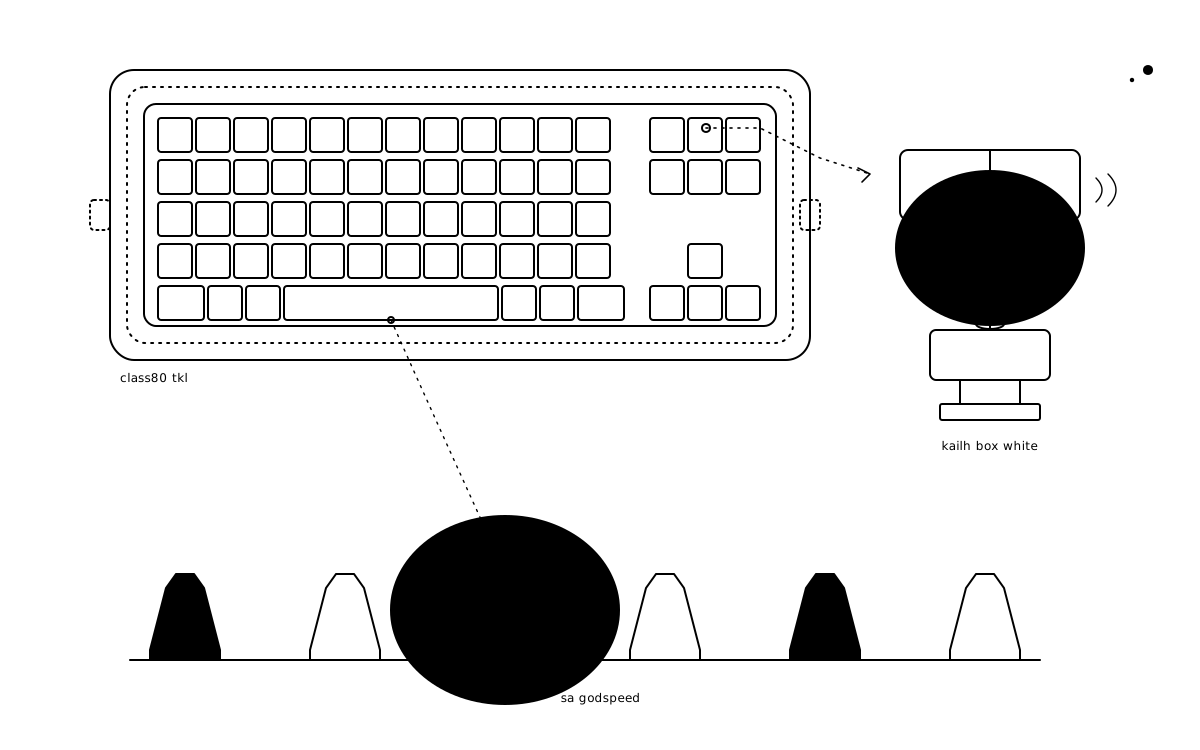
Most theme builds start with a keycap set and work backward — pick the colorway, then find a board and switch that don't fight it. This one works because the board was designed for a different era's proportions, the caps are tall enough to need that era's proportions, and the switch sounds like the thing both of them are pretending to be. None of the three parts is doing theme work alone.
The parts
| Role | Part | Why it's here |
|---|---|---|
| Board | MM Studio Class80 | Retro-styled CNC aluminum TKL, thick bezels, ~3.5kg, gasket mount |
| Keycaps | SA Godspeed | Steel-blue and cream SA-profile doubleshot ABS, space-exploration theme |
| Switch | Kailh Box White | Box-stem clicky, 45g actuation / 60g bottom-out, audible click bar |
The Class80 is discontinued — MM Studio isn't running it — so this is a secondhand-market build, not a configurator order. That's worth saying up front, because it changes how a builder should read the rest of this piece: less "add to cart," more "know what to look for."
The case that makes room for the caps
Tall sculpted profiles like SA have a clearance problem that thinner modern boards create for themselves. A low-profile gasket build optimized for a slim silhouette often has shallow plate standoffs and a shallow case lip, both tuned around the assumption that whatever keycaps land on top will be OEM or Cherry height. Stack a full SA set on a board like that and the tallest row can crowd the case's sightline — not a functional problem, just a visual one where the cap height outruns the case's proportions and the board starts to look like it's wearing the wrong size hat.
The Class80 doesn't have that problem, because it was never trying to be slim. Its bezels are thick by design — a deliberate callback to the boxy, business-terminal boards it's styled after — and that same thickness gives the plate generous headroom relative to the case walls. SA's dramatic row-to-row sculpt, where the number row leans forward and the bottom row tilts back at a steep angle, needs a case that isn't visually competing with it. A thick-bezel retro shell reads as "built for a tall keycap" even though the relationship is really the other way around: both the case proportions and the cap height are inherited from the same design lineage, and putting them together doesn't require a compromise either part wasn't already making.
A click that matches the console fantasy
The visual half of this theme is easy to see — steel-blue and cream caps on a boxy retro shell look like something bolted to a 1980s control panel. The part that's easy to miss is that Kailh Box White is doing the same work with sound.
Box White is a click-bar switch: a separate plastic jacket clicks against the stem as it passes the tactile bump, giving a sharp, audible report right at actuation, distinct from the softer click-leaf switches some other clicky lines use. At 45g actuation and 60g bottom-out, it's light enough that a typist isn't fighting the spring to get that click — the sound arrives readily, on nearly every keystroke, at typing speed. That's the acoustic signature of exactly the kind of console this build is visually referencing: a board that announces each input instead of absorbing it. A silent or linear switch under these caps would leave the theme half-built — all the visual cues of a mission-control terminal with none of the confirming chatter that made those terminals sound the way they did.
The box-stem geometry is also a practical fit for a secondhand board. Kailh's box design encloses the stem to resist dust and debris intrusion better than an open-stem switch, which matters more on a discontinued board a builder is buying used, possibly without knowing its full history, than it would on a board fresh out of a factory box.
Build notes: fit, wobble, and plate tolerances
Two practical snags are worth knowing before ordering either the caps or the switches.
SA's tall stems and deep sculpt make stem wobble more noticeable than it is on a shorter profile — more leverage means more felt movement at the top of the cap for the same amount of play at the stem. Godspeed is a Signature Plastics run through Drop, doubleshot ABS with the fit tolerances that implies; it's not a loose set, but any SA set benefits from checking a few caps on the switches before committing to a full build, since stem tolerances can vary slightly across a production run and a wobbly cap is far more obvious in SA than in a flatter profile.
On the switch side, box-stem switches like Box White have a slightly different cross-section than open-stem MX switches, and not every plate cuts its switch openings with identical tolerance. A loose-fitting box-stem switch in an oversized plate hole doesn't lose function, but it can pick up a rattle that undercuts the crisp click the theme depends on. Worth test-fitting a handful of switches in the Class80's plate before bulk-lubing or filming anything, since a used board's plate may have seen prior switches and prior wear.
Who should skip this build
This pairing is not for a typist who wants quiet. Box White's whole contribution to the theme is an audible click on nearly every keystroke — in a shared office or a thin-walled apartment, that's a real cost, not a quirk to tolerate. It's also not for anyone chasing a minimalist modern desk: thick bezels, a dense aluminum shell, and SA's tall sculpt are the opposite of the low-profile, low-visual-mass boards that dominate that look. And it's not a build for someone who wants a board they can order complete tomorrow — the Class80's discontinued status means patience on the secondhand market is part of the build, not an inconvenience around it.
Verdict
The strength of this build isn't any single part — it's that the case's proportions, the keycap height, and the switch's sound all point at the same reference without anyone having to force them there. A thinner board would fight the SA sculpt visually; a silent or linear switch would leave the theme's acoustic half unbuilt; a shorter keycap profile would waste the Class80's headroom entirely. Swapping any one part for a more convenient or quieter alternative doesn't just weaken the theme — it breaks the reason the other two parts were chosen. For a builder willing to hunt a discontinued board on the secondhand market and live with an audible click at the desk, that's a rare thing in a parts-pairing build: three purchases that only make full sense together.
Keep reading
- Ideas
Mixing keycap profiles on one board: what actually works
Mixing profiles reads as a deliberate design choice or a rookie mistake depending entirely on where the swap lands. A handful of zones tolerate it well. The alpha block almost never does.
thock6 min read - Ideas
Pairing Oil Kings with the Mode Sonnet
This pairing has been on the bench for months, and a free Sunday finally made it happen. The Sonnet is a soft 75 with a block mount, and Oil Kings are a heavy factory-lubed linear — together they hit a register worth coming back to.
thock5 min read - Ideas
Parts pairing for a split build: two independent halves, two independent decisions
A split board is two keyboards that happen to share a keymap. Most builders still buy parts for it like it's one — matching switches, ordering a single sculpted keycap set, and never touching the left half's tuning differently from the right's.
thock9 min read - Ideas
Hot-swap sockets: what you actually give up for the convenience
Tool-free switch swapping turned hot-swap PCBs into the default spec across the hobby, and the default is earned. Here is the honest, specific list of what a socket costs against a soldered joint — and the two cases where soldering is still the right call.
thock8 min read