The Gateron Magnetic Jade gets a sensing field — and the catalog gets its first one
On 2026-11-06, thock's catalog backfilled a sensing field onto the Gateron Magnetic Jade's switch record, reading hall-effect. It's the first structured sensing field anywhere in the switch catalog — and it only just caught up to what the record's own description had been saying since August.
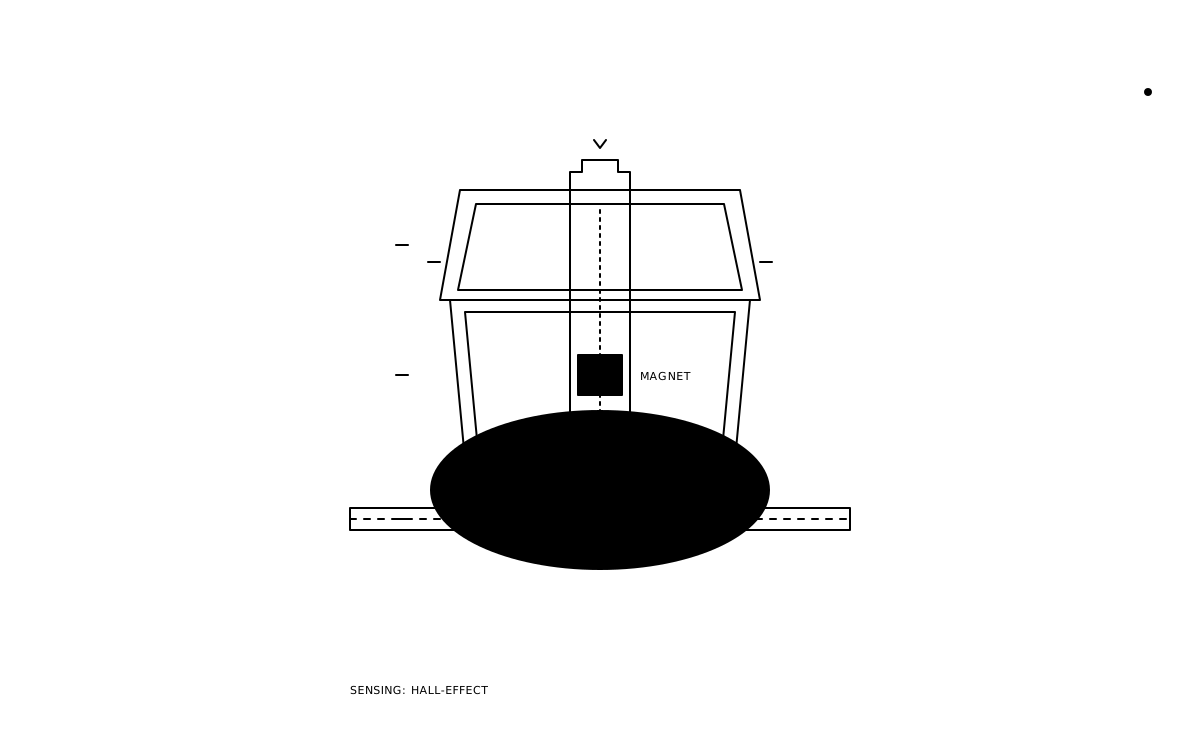
Catalog commits don't usually clear the bar for news on their own. A field flipping from unset to populated is exactly the kind of change that's supposed to be invisible — housekeeping, not a headline. But on 2026-11-06, commit a8f4f006 ("backfill sensing hall-effect on gateron-magnetic-jade") did something no other commit in the switch catalog has done before: it added a sensing field to a switch record at all. The value it set, on the record for the Gateron Magnetic Jade, is hall-effect. Check the rest of the catalog and the field simply isn't there — not set to something else, not empty, absent from the schema entirely on every other switch. The Magnetic Jade is the first.
What the commit actually did
The rest of the Magnetic Jade's record didn't move. Type stays linear, the housing stays polycarbonate over nylon, the stem stays POM, the spring is still a 30-to-50-gram curve over 3.5mm of travel, and the status is still in-production. The only additions are the new sensing: hall-effect field and a refreshed updatedAt timestamp. Nothing about the switch changed on 2026-11-06. What changed is that the catalog can now say, in a field a query can read, what kind of switch this is — rather than only in a paragraph a reader has to parse.
The commit message says the value was scout-verified against three independent sources: the vendor's own product listing, a switch database site's comparison table, and a retailer's product description. All three agree on the same mechanism — a rare-earth magnet seated in the stem, read by a Hall sensor on the PCB, with no metal-leaf contact anywhere in the stroke. That's the same picture Wooting's own listing, hlplanet's comparison table, and rndkbd's retail listing all give — the same sources thock's own deep dive on this switch leaned on back in August. Line the commit message's phrasing up against those three and the mapping is direct: Wooting's listing is the vendor's own product page, hlplanet's table is the switch-database comparison, and rndkbd is the retailer description. None of the three is new information. What's new is a human-shaped claim becoming a machine-shaped one.
The prose already knew
That overlap is the actual story here, and it's a quieter one than "new field added." The Magnetic Jade's record has carried a prose description field describing hall-effect magnetic sensing — "a rare-earth magnet in the stem rather than a physical leaf spring for actuation sensing" — since well before 2026-11-06. thock's deep dive on the switch — Gateron Magnetic Jade's full teardown of materials and compatibility — published 2026-08-21 and was built entirely on that premise without needing a structured field to confirm it. The sensing mechanism wasn't a secret. It just wasn't queryable.
That gap — description first, structured field more than two months later — is a pattern worth naming rather than letting pass. A catalog's prose field is written by someone who's already read the sources and formed a judgment; a structured field is a promise that the same claim can survive being filtered, sorted, and compared without a human re-reading the paragraph first. Those two things don't have to land on the same day, and here they didn't. The backfill isn't correcting an error in the description — it's formalizing a claim the description made months earlier, once scout had cause to revisit the record and verify it was safe to encode as data rather than narrative.
Why the field, not just the sentence, matters
A sentence describing a mechanism is for a reader. A field is for a program. The practical difference shows up the moment anyone tries to build something that spans more than one switch record at a time — a comparison table, a "find me every hall-effect linear" filter, a quiz that asks a reader whether they want contact-closure or magnetic sensing and then narrows the catalog accordingly. None of that works off prose. All of it works off a field that's either set to hall-effect, set to something else, or absent. Right now, across eighteen switch records in the catalog, exactly one carries that field. The other seventeen — including contact-closure switches whose descriptions are just as explicit about their own mechanism — don't yet have anywhere to put the answer in a form a query can read. That gap extends inside the Magnetic Jade's own family, too: thock's deep dive on the switch covers siblings like the KS-20 White and the Jade Pro, and boards like the Wooting 60HE and Keychron Q1 HE that each only take one of Gateron's two magnet orientations. Every one of those compatibility facts currently lives in prose. None of it is a field yet.
What to watch
One populated field doesn't make a taxonomy. The interesting question now is whether this was a one-off backfill triggered by scout happening to revisit this particular record, or the first entry in a pass that eventually reaches every switch in the catalog — the KS-20 family siblings the Magnetic Jade belongs to, the metal-leaf switches whose descriptions already say "contact closure" in prose, the optical switches with their own distinct mechanism. If the field spreads, the payoff is exactly the kind of structured compare-and-filter feature a sensing taxonomy exists to enable. If it stays at one record, this stays what it is today: proof that the catalog's prose was right months before its schema could prove it.
Build sheet
Keep reading
- News
Wooting's 80HE+ preorder starts shipping in two waves this fall
Preorders for Wooting's 80HE+ opened September 17, 2026, and the first units are headed out the door in two separate waves — ABS and Module boards in late October, the zinc case and Lekker Knob Large accessory in mid-December.
thock6 min read - News
Computex 2026: hall-effect keyboards enter the enthusiast conversation
Computex 2026 (May 20–24) was the week hall-effect stopped being a gaming-peripheral curiosity and walked into the same room as enthusiast-grade chassis. Two boards made that argument concrete.
thock8 min read - Deep Dives
Gateron Ink: the dye, the tolerance, and what's actually new
Gateron's Ink line is sold on its housing color — a deep, semi-translucent plum unlike anything else in the catalog. The more interesting story is buried in the V2 revision notes: tighter stem-post tolerances and factory lube arrived alongside the dye, not because of it.
thock9 min read - Deep Dives
Gateron Magnetic Jade: the Hall-effect linear built to be argued about like a mechanical one
Pull a Magnetic Jade apart and the parts list reads like a mid-tier mechanical linear: polycarbonate top, nylon bottom, POM stem, factory lube. Where the leaf would be, there is a magnet. That one substitution explains the feel, the sound, and why it will not fit half the Hall-effect boards on the market.
thock11 min read