loading · part
Spec sheet
- Type
- Linear
- Top housing
- PC
- Bottom housing
- Nylon
- Stem
- POM
- Spring
- 30g actuation · 50g bottom-out
- Travel
- 3.5 mm
- Factory lubed
- yes
- Released
- Sep 1, 2022
Hall-effect magnetic linear using a rare-earth magnet in the stem rather than a physical leaf spring for actuation sensing. The linear travel is smooth and the actuation point can be adjusted digitally in supporting keyboards; the jade coloring mirrors the Box Jade but the mechanism is entirely distinct. Suited to rapid-fire gaming and endurance typing where metal-contact fatigue matters.
Mentioned in 8 articles
Guides
What a switch's gram number actually tells you before you buy
Every switch spec sheet carries two gram numbers — actuation and bottom-out — and treating them as one number is the most common mistake in a first switch purchase. Here's what each one measures, what ranges actually suit typing versus gaming, and why the same number can feel completely different depending on switch type.
thock8 min read
Deep Dives
What a TMR sensor is actually measuring under a magnetic switch
Keychron's Q16 HE 8K and Cherry's XTRFY TMR boards get covered as a new switch generation. The real change sits a few millimeters below the magnet — a tunnel junction reading field strength through resistance instead of voltage, with a noise floor low enough to matter at the shallow end of the stroke.
thock11 min read
Trends
Hardware caught up to Wooting. Firmware hasn't.
Wooting's 80HE+ preorder is the top mover on thock's 2026-W39 trends tracker, climbing from a score of 40 to 80 over eight weeks. The switch hardware behind it isn't the reason — Hall-effect sensing is table stakes across the category by September 2026. The firmware behind it still isn't matched.
thock6 min read
Deep Dives
Rapid trigger is a firmware algorithm, not a switch spec
A rapid-trigger switch is not a special switch. It is an ordinary analog sensor wired to a polling loop that redraws its own actuation point every cycle — and that loop, not the sensor, is where the real engineering happens.
thock9 min read
Deep Dives
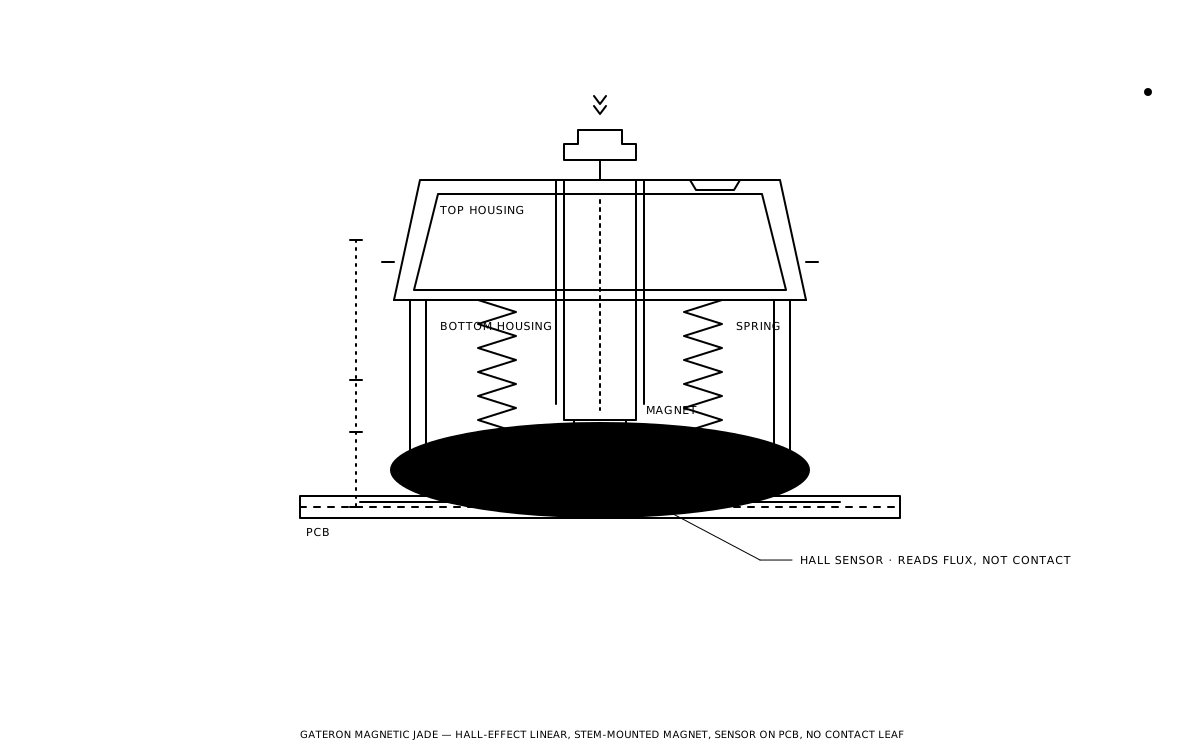
Gateron Magnetic Jade: the Hall-effect linear built to be argued about like a mechanical one
Pull a Magnetic Jade apart and the parts list reads like a mid-tier mechanical linear: polycarbonate top, nylon bottom, POM stem, factory lube. Where the leaf would be, there is a magnet. That one substitution explains the feel, the sound, and why it will not fit half the Hall-effect boards on the market.
thock11 min read
Trends
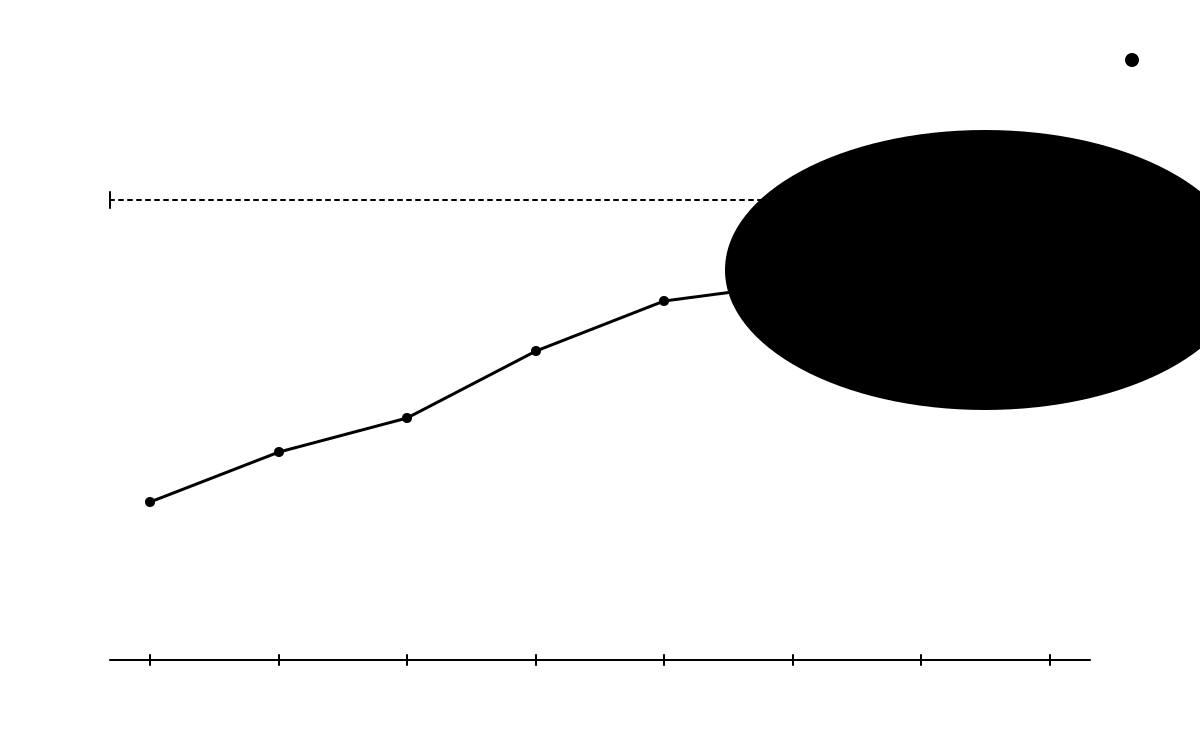
Hall-effect stopped climbing. That's not the same as cooling off.
The Hall Effect/Rapid Trigger category has held flat at 97 on thock's trends tracker for two straight weeks, after climbing from 82 in late June. A flat line at the top of the chart looks like fading interest if you're reading it as a stock ticker. Read as a market snapshot, it says something closer to the opposite.
thock6 min read
Guides
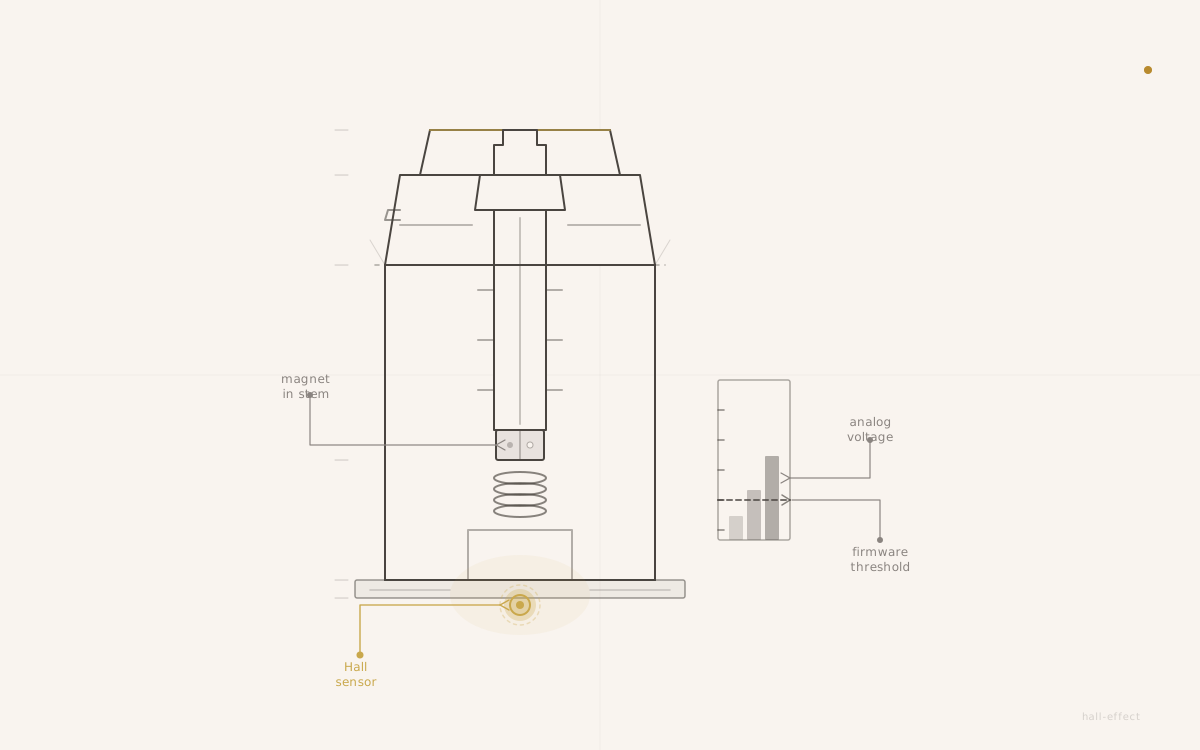
Hall-effect keyboards: a practical buyer's guide
Rapid trigger, per-key actuation depth, analog axis output — Hall-effect keyboards deliver all three, but only if the firmware matches the hardware. Here is what to look for, what to pay, and who should skip the category entirely.
thock10 min read
News
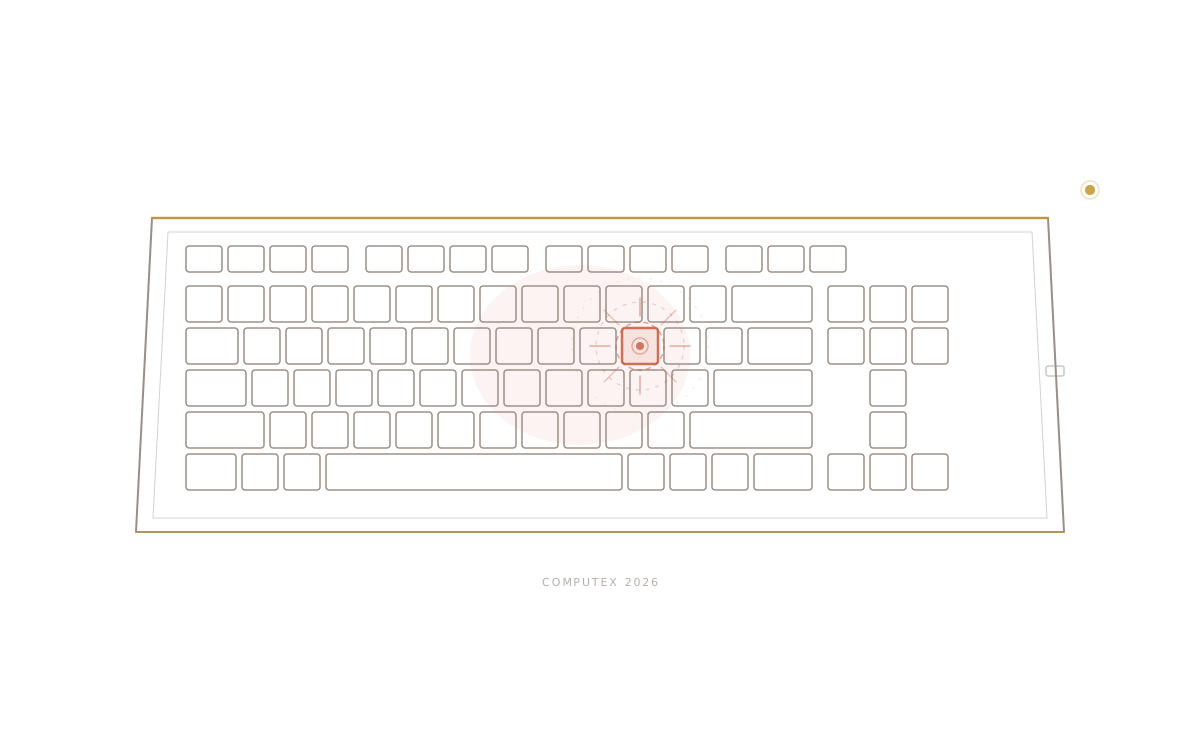
Computex 2026: hall-effect keyboards enter the enthusiast conversation
Computex 2026 (May 20–24) was the week hall-effect stopped being a gaming-peripheral curiosity and walked into the same room as enthusiast-grade chassis. Two boards made that argument concrete.
thock8 min read
Gateron Magnetic Jade appears in editor-curated build sheets.