loading · part
Spec sheet
- Layout
- 60%
- Case material
- Plastic
- Mount style
- Tray mount
- Hotswap
- yes
- Wireless
- no
- Released
- Apr 1, 2022
The board thock's Hall-effect coverage keeps citing as the analog-input reference point: hotswappable Lekker Hall-effect switches, true analog input, and per-key adjustable rapid trigger in a tray-mount ABS case. Wired USB-C only, no wireless option. Entered mass production in April 2022 and remains the fixed point reviewers measure newer HE and TMR boards against for rapid-trigger tuning depth and configurator maturity.
Mentioned in 8 articles
Deep Dives
What a TMR sensor is actually measuring under a magnetic switch
Keychron's Q16 HE 8K and Cherry's XTRFY TMR boards get covered as a new switch generation. The real change sits a few millimeters below the magnet — a tunnel junction reading field strength through resistance instead of voltage, with a noise floor low enough to matter at the shallow end of the stroke.
thock11 min read
Trends
Hardware caught up to Wooting. Firmware hasn't.
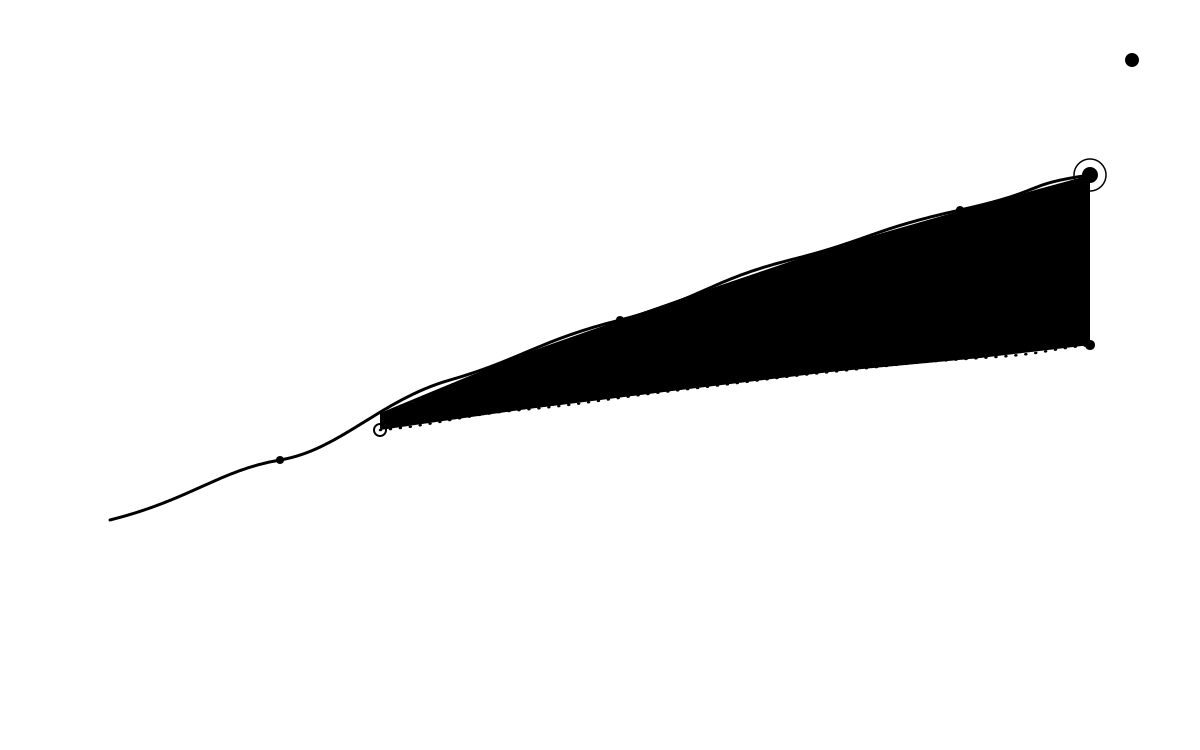
Wooting's 80HE+ preorder is the top mover on thock's 2026-W39 trends tracker, climbing from a score of 40 to 80 over eight weeks. The switch hardware behind it isn't the reason — Hall-effect sensing is table stakes across the category by September 2026. The firmware behind it still isn't matched.
thock6 min read
News
Wooting's 80HE+ preorder starts shipping in two waves this fall
Preorders for Wooting's 80HE+ opened September 17, 2026, and the first units are headed out the door in two separate waves — ABS and Module boards in late October, the zinc case and Lekker Knob Large accessory in mid-December.
thock6 min read
Deep Dives
Rapid trigger is a firmware algorithm, not a switch spec
A rapid-trigger switch is not a special switch. It is an ordinary analog sensor wired to a polling loop that redraws its own actuation point every cycle — and that loop, not the sensor, is where the real engineering happens.
thock9 min read
Deep Dives
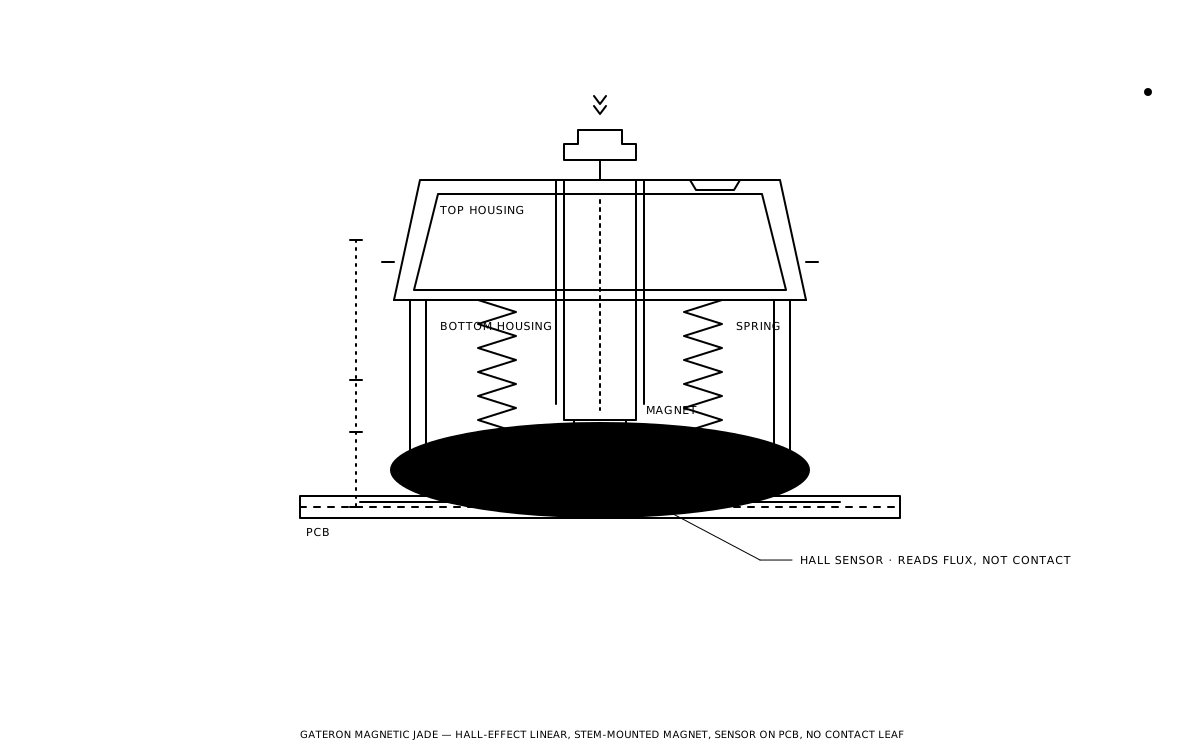
Gateron Magnetic Jade: the Hall-effect linear built to be argued about like a mechanical one
Pull a Magnetic Jade apart and the parts list reads like a mid-tier mechanical linear: polycarbonate top, nylon bottom, POM stem, factory lube. Where the leaf would be, there is a magnet. That one substitution explains the feel, the sound, and why it will not fit half the Hall-effect boards on the market.
thock11 min read

Deep Dives
How the 60% became the default custom-keyboard layout
Every custom-keyboard buyer's guide since the mid-2010s opens with the same four-term vocabulary — 60%, 65%, 75%, TKL — as though it always existed. It didn't. One open-source PCB out of a geekhack thread is most of the reason that taxonomy exists at all.
thock11 min read
Deep Dives
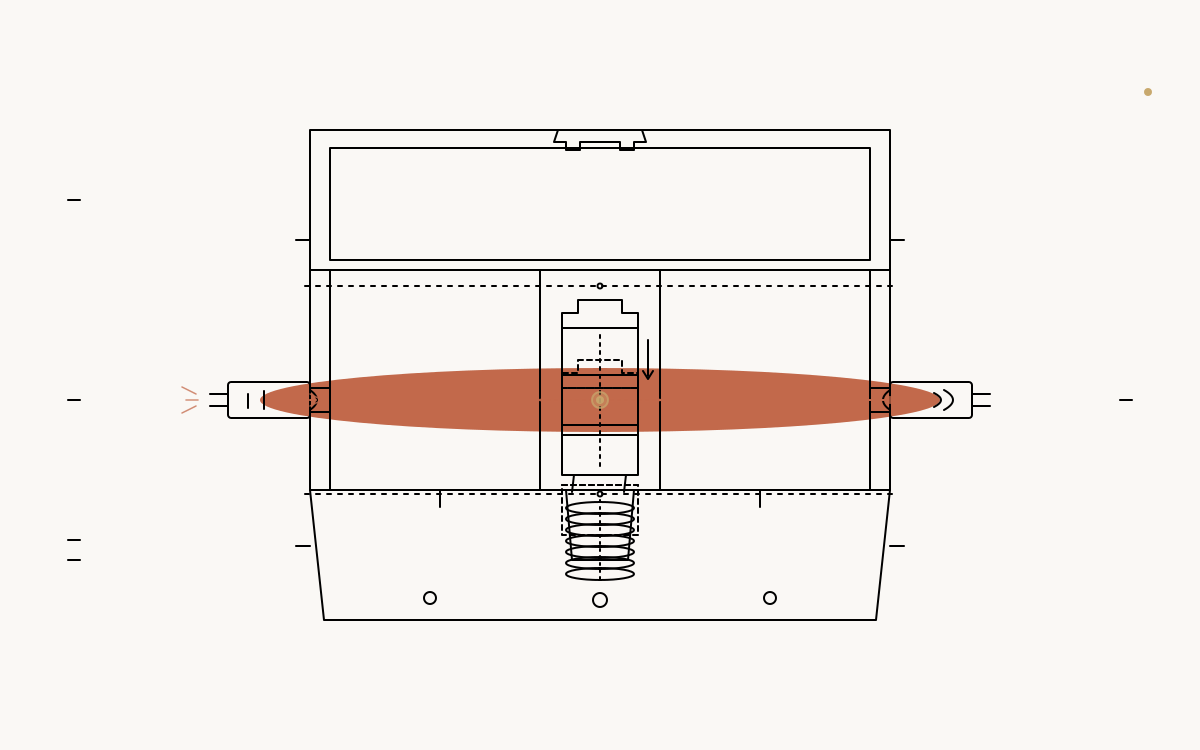
How optical switches actually sense a keypress
An optical switch replaces the metal contact with a beam of light. That one change eliminates contact bounce entirely, reshapes the latency math, and is why some optical boards can offer per-key actuation at 0.1mm granularity. The mechanism is simpler than the marketing makes it sound.
thock12 min read
Trends
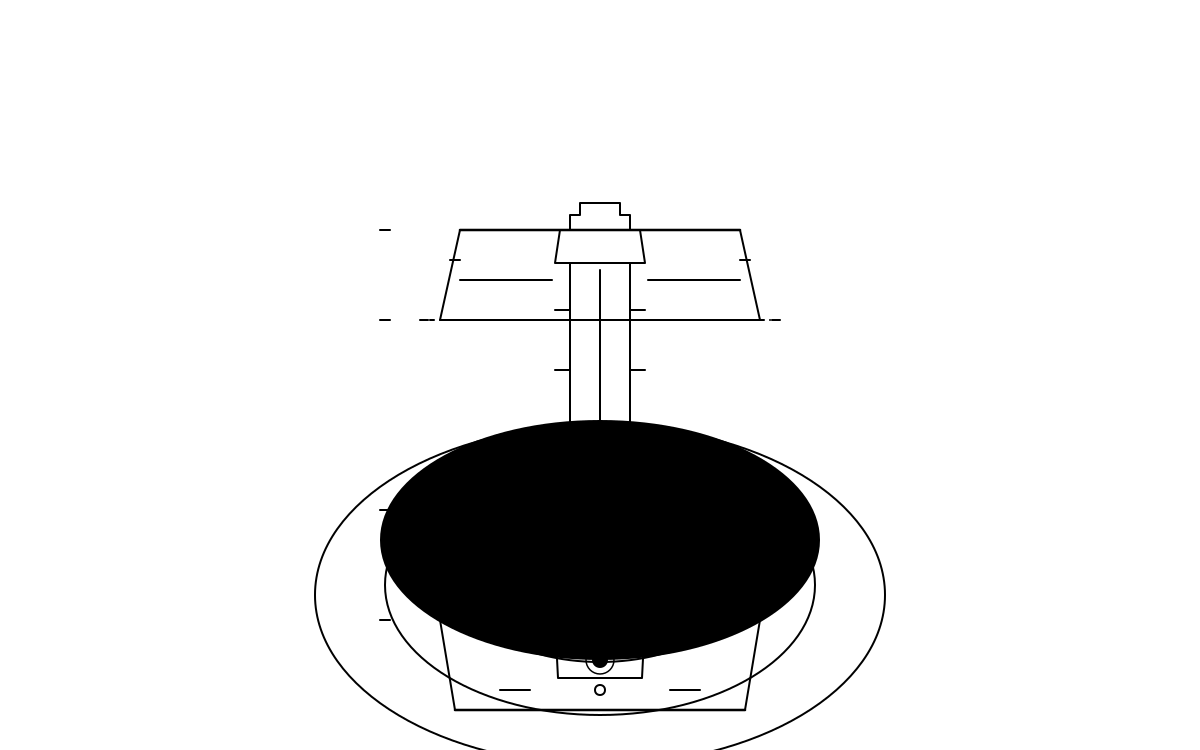
How Hall-effect quietly became the new mid-premium default
The polling-rate hype is loud and easy to wave off — 8K, 32K, numbers chasing each other up the spec sheet. The quieter story is that the magnetic-switch tier has stopped being a Wooting-shaped niche and has settled into the $100–$230 prebuilt slot the scene actually buys from. The volume has moved, not just the marketing.
thock7 min read
Wooting 60HE appears in editor-curated build sheets.