loading · part
Spec sheet
- Type
- Tactile
- Top housing
- PC
- Bottom housing
- Nylon
- Stem
- POM
- Spring
- 55g actuation · 62g bottom-out
- Travel
- 4 mm
- Factory lubed
- yes
- Released
- Jun 9, 2026
Alps-inspired mid-weight tactile whose pronounced POM stem step front-loads the bump event, producing a sharp snap with quick decay rather than the plateau or drawn-out crossing of conventional MX tactiles. Polycarbonate top over nylon bottom; factory-lubed on rail contacts only, leaving the bump face dry to preserve tactile sharpness. 5-pin PCB mount.
Mentioned in 9 articles
Deep Dives
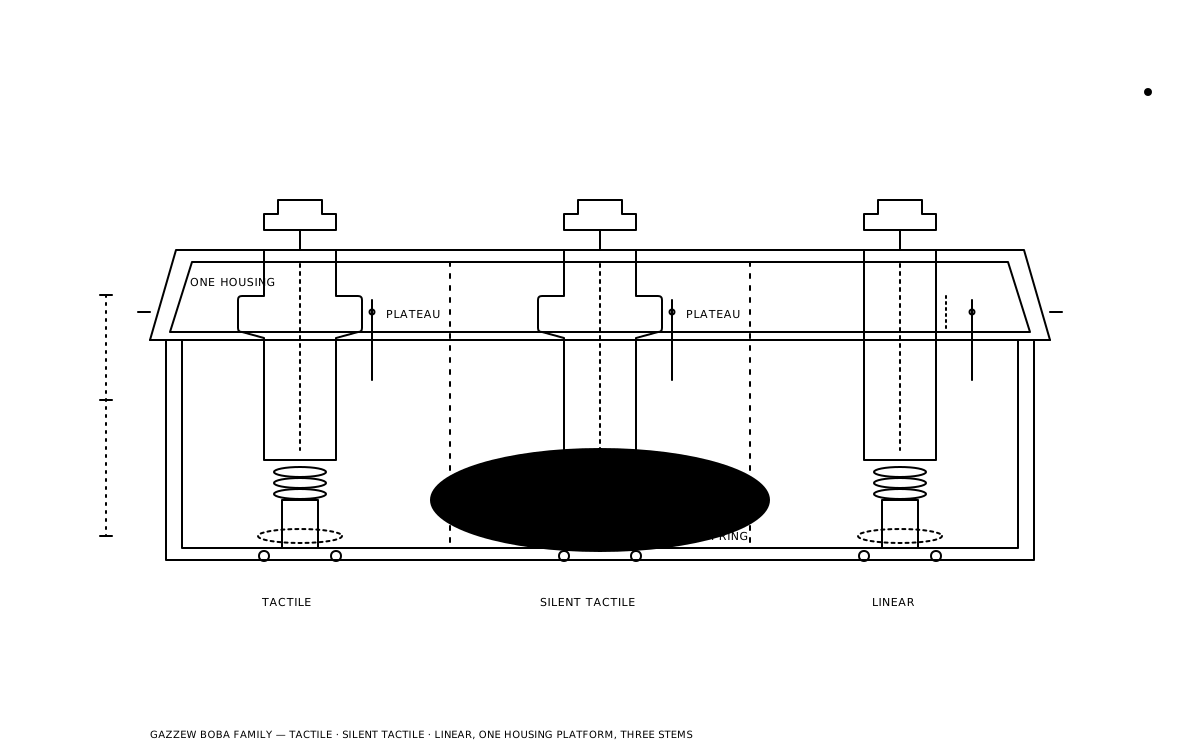
The Boba Family: One Housing Blend, Five Switches, and the Sound thock Is Named For
Gazzew designs, Outemu molds, and a plastic softer than nylon does the rest. Every Boba is the same chamber with something deliberately left out — and the pattern of subtractions is the whole family tree.
thock10 min read
Deep Dives
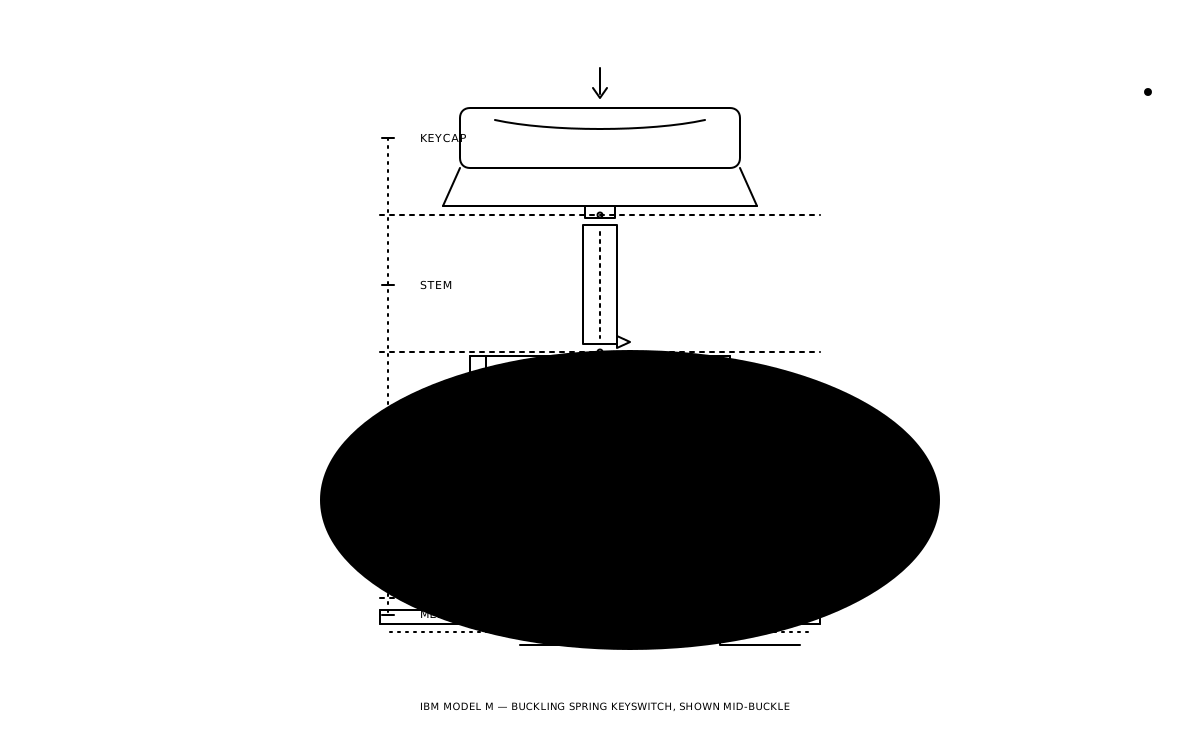
How buckling-spring switches actually work
thock has already reached for the buckling-spring snap twice — once to describe a Topre dome, once to describe a click-bar's sharpness — without ever explaining what a buckling spring actually is. The mechanism predates both, and it is stranger and more mechanically honest than either.
thock10 min read
Deep Dives
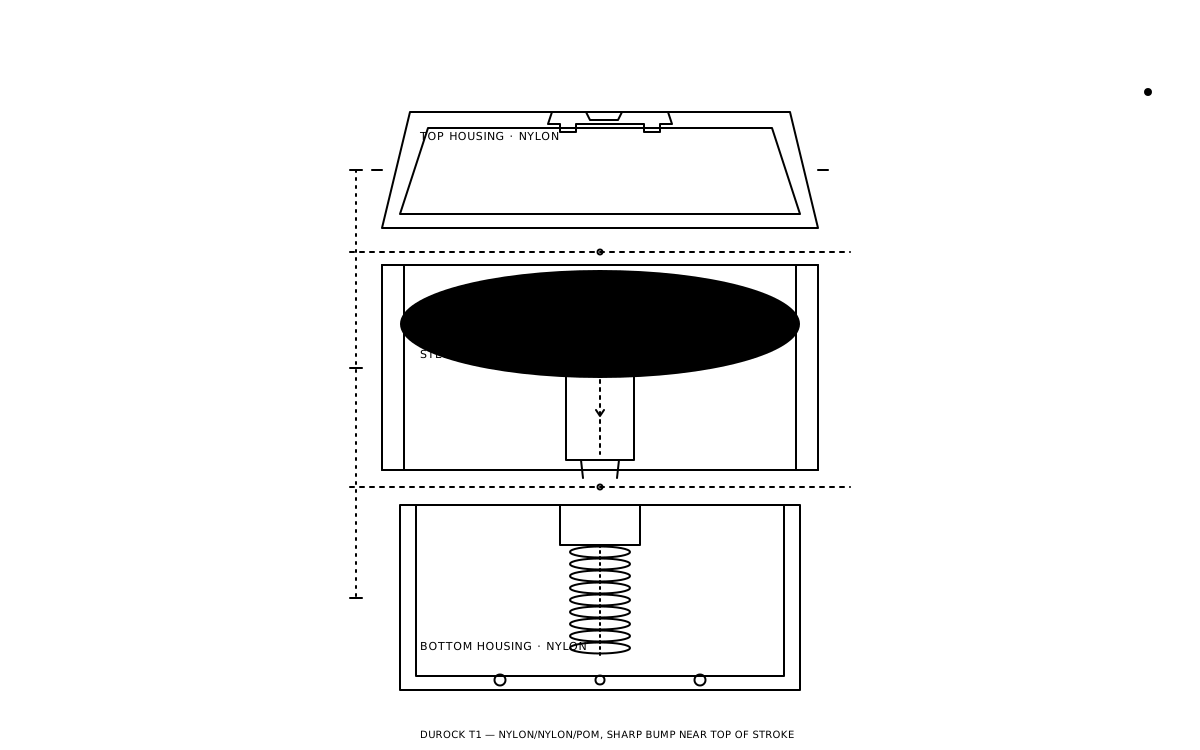
Why the Durock T1's Bump Feels the Way It Does
The Durock T1 keeps turning up as the comparison point in other switches' deep-dives — the reference a reviewer reaches for when a bump needs to read as heavy and serious. It has never had its own.
thock10 min read
Deep Dives
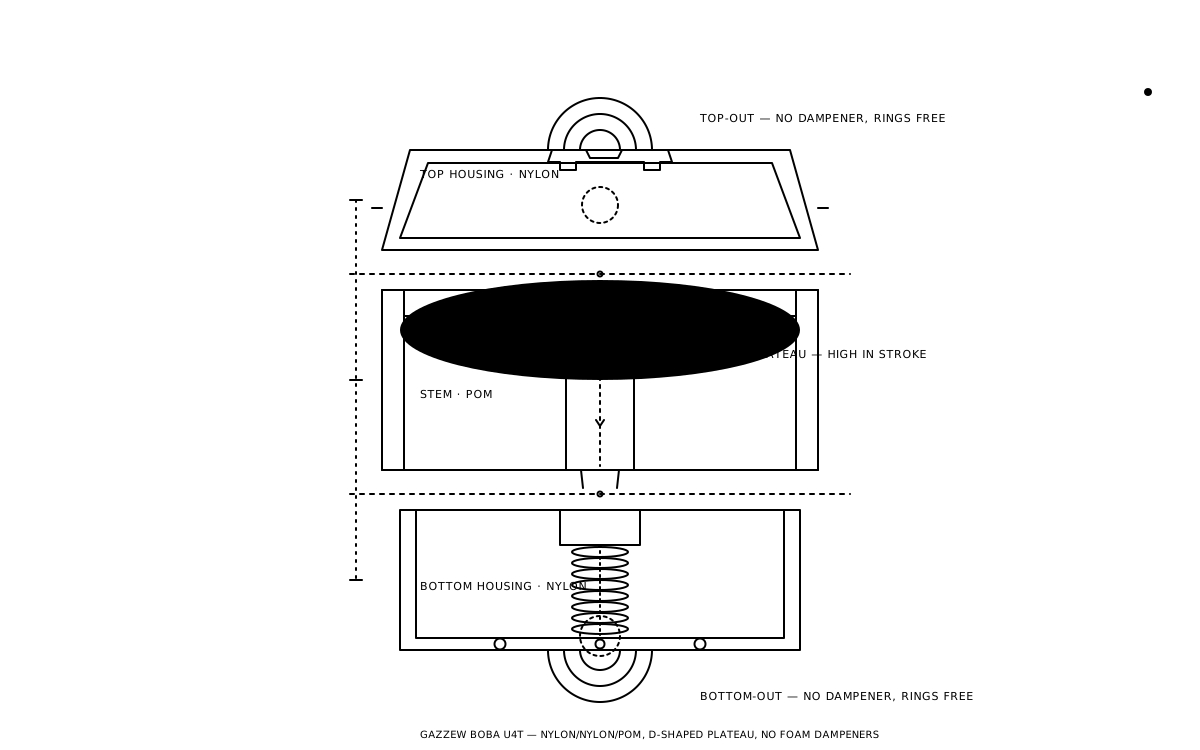
Why the Gazzew Boba U4T Rings Where the Boba U4 Stays Quiet
Same housing, same bump position — the U4T's whole personality comes down to what Gazzew left out. Pull the dampening pads from a Boba U4 and the bottom-out stops being polite.
thock11 min read
Deep Dives
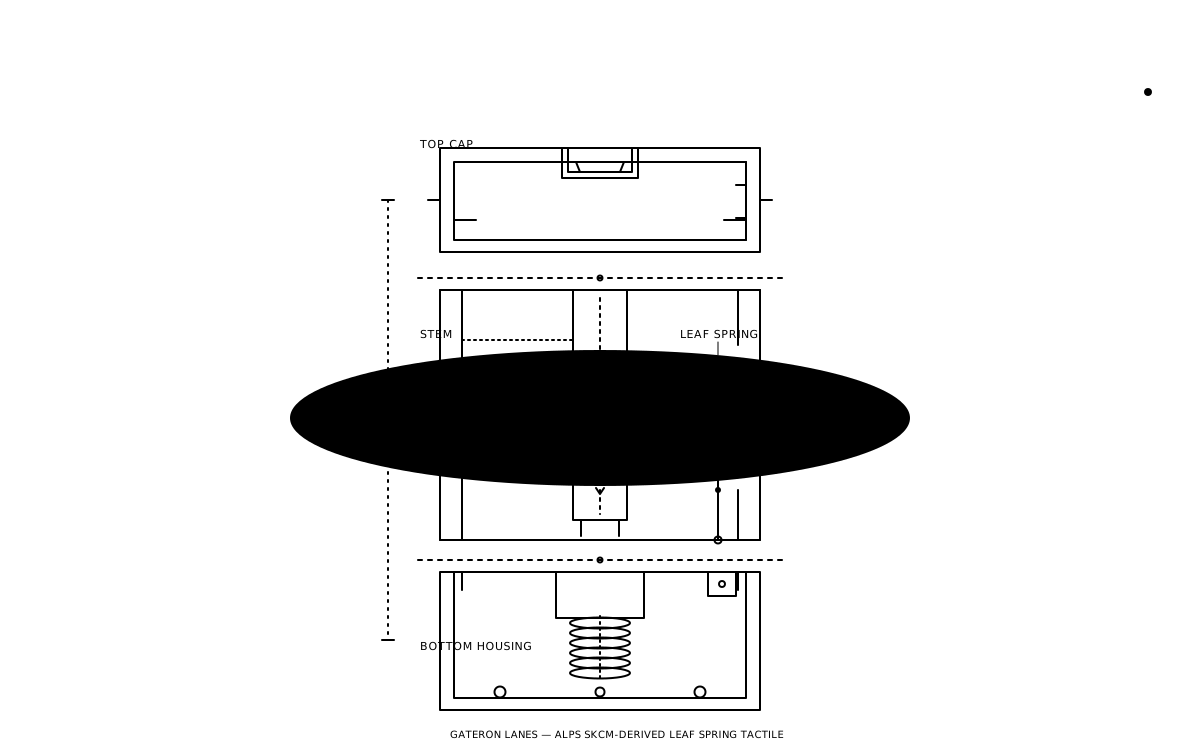
Gateron Lanes: The Alps-Inspired Tactile Taking Over the Mid-Range
Gateron's Lanes draws its DNA from the Alps SKCM Orange — one of the most loved tactile mechanisms of the 1980s — and arrived in June 2026 with enough community conviction to sell out on first drop.
thock12 min read
Deep Dives
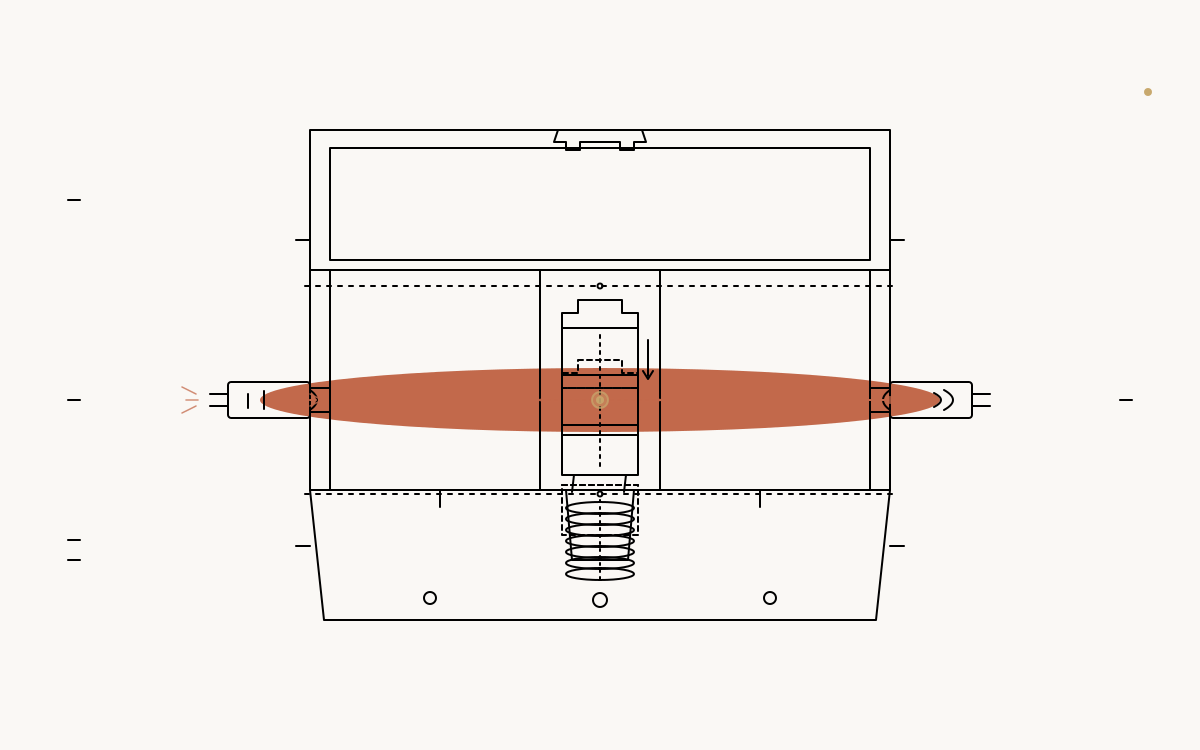
How optical switches actually sense a keypress
An optical switch replaces the metal contact with a beam of light. That one change eliminates contact bounce entirely, reshapes the latency math, and is why some optical boards can offer per-key actuation at 0.1mm granularity. The mechanism is simpler than the marketing makes it sound.
thock12 min read
Deep Dives
What Cherry's MX2A revision actually changed
Cherry's MX2A landed in 2023 with a real engineering update — factory lube, tighter tolerances, the same 100M-press lifespan. The reason the discourse cooled isn't that the switch failed; it's that the enthusiast slot it aimed at was already claimed by the time it arrived.
thock8 min read
Deep Dives
How HMX took over the mid-tier linear slot
Two years ago HMX was a name on a vendor page nobody pronounced confidently. In W19, the Cloud sat second among switches on our tracker and landed in half the $120 prebuilts the scene argues about. The rise wasn't an accident.
thock13 min read
Deep Dives
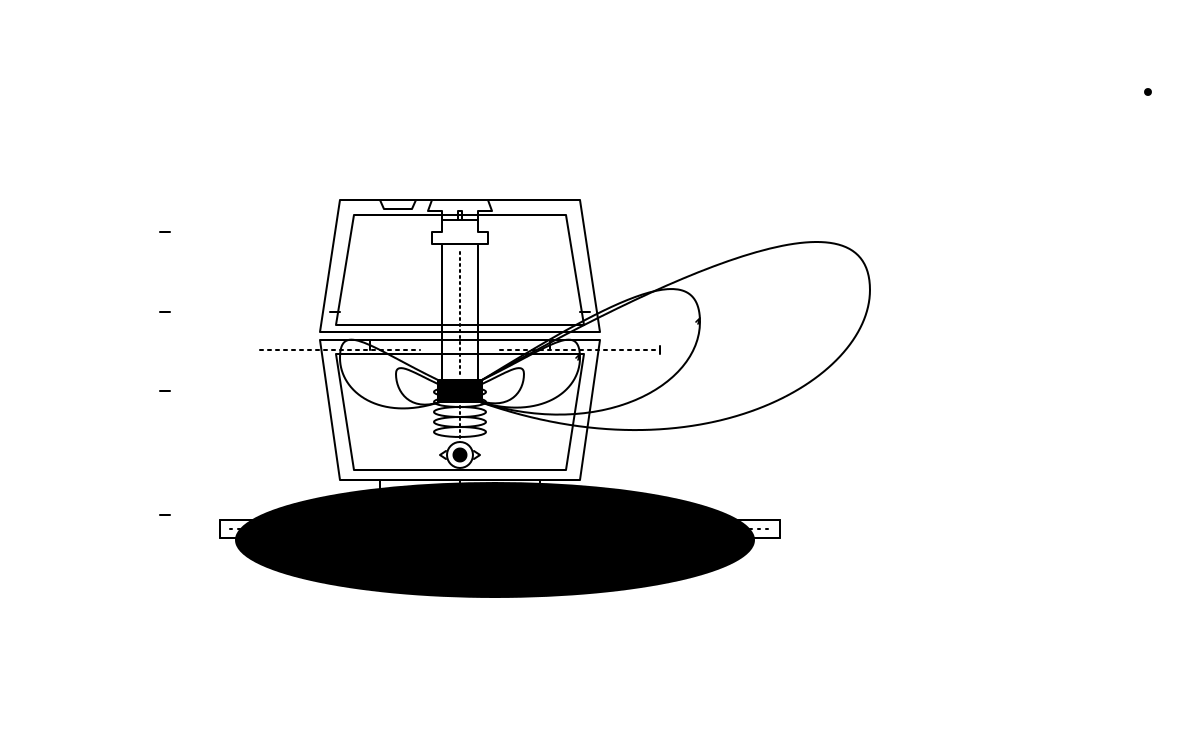
How Hall-effect switches actually sense a keypress
A Hall-effect switch is not a faster MX switch. It is a different sensing lineage — a magnet in the stem, a sensor on the PCB, and an analog voltage where contact closure used to be. The features the marketing pages lead with all unwind from that one architectural fact.
thock13 min read
Gateron Lanes appears in editor-curated build sheets.