loading · tag
Archive
Every #split piece

Ideas
Parts pairing for a split build: two independent halves, two independent decisions
A split board is two keyboards that happen to share a keymap. Most builders still buy parts for it like it's one — matching switches, ordering a single sculpted keycap set, and never touching the left half's tuning differently from the right's.
thock9 min read
Deep Dives
What a split keyboard actually changes: the mechanics
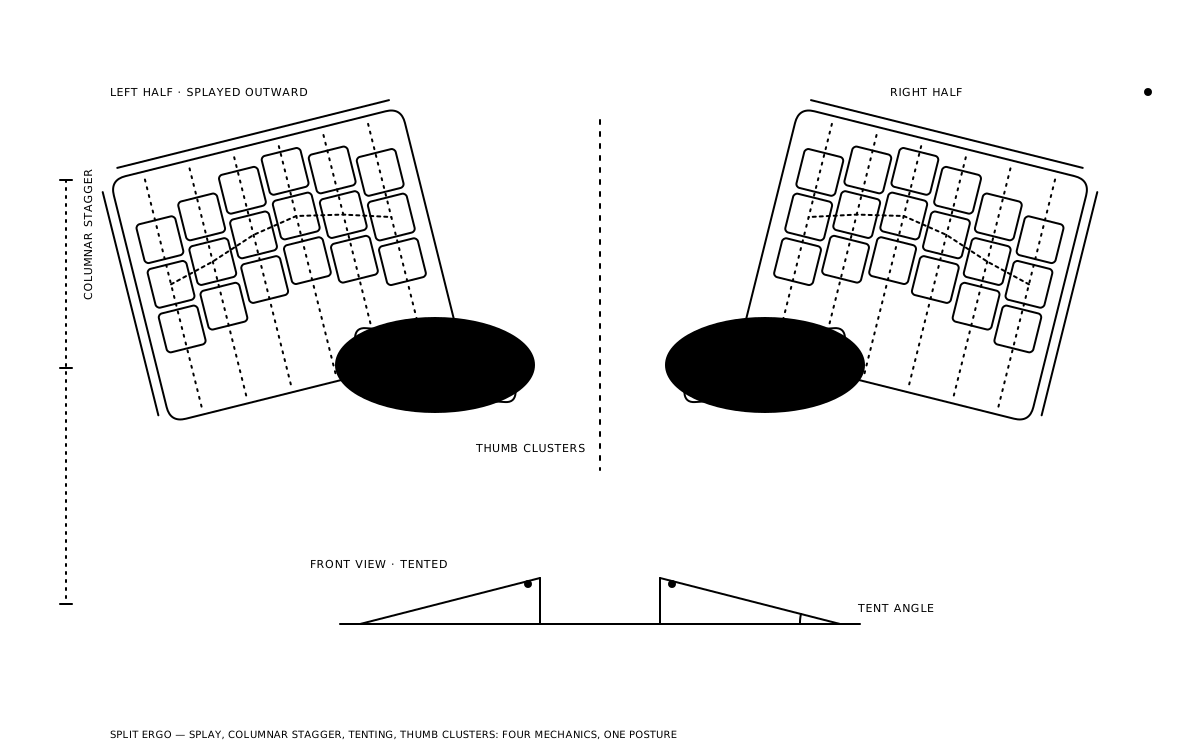
A conventional keyboard bends the wrist three separate ways, and every ergonomic geometry on the market is a fix for exactly one of them. Sorting out which fix does what — and which claims the research backs — is the difference between buying a posture and buying a story.
thock10 min read
Guides
ZMK for wireless and split builds: a practical guide
QMK answers almost every firmware question on a wired board. Add a battery and a second half, and the honest answer changes — this is the guide for the builder standing at that fork.
thock10 min read

Guides
Split and ergonomic keyboards: a buyer's guide
Split doesn't automatically mean ergonomic, and ergonomic doesn't automatically mean split. Before spending money on either, a reader needs to know which of four separate design choices they're actually buying — and which one of them is solving their problem.
thock9 min read

Trends
The split/ergo cohort grew up
Split and ergonomic boards spent a decade as a hobbyist sub-cohort orbiting a stagger-majority. By 2026 the Voyager line, the Glove80, and a steady trickle of r/mk transition posts have pushed split/ergo across a visibility threshold — still a minority, but now a reference category instead of a footnote.
thock5 min read