loading · part
Spec sheet
- Type
- Tactile
- Top housing
- PC
- Bottom housing
- PC
- Stem
- Mixed
- Spring
- 55g actuation · 63.5g bottom-out
- Travel
- 3.8 mm
- Factory lubed
- yes
- Released
- Jun 1, 2023
Mid-tactile with a UHMWPE stem and sparkly polycarbonate housings; the bump sits at the top of the stroke and rounds off into a softened bottom-out. Sound is muted and creamy rather than poppy.
Mentioned in 6 articles
Ideas
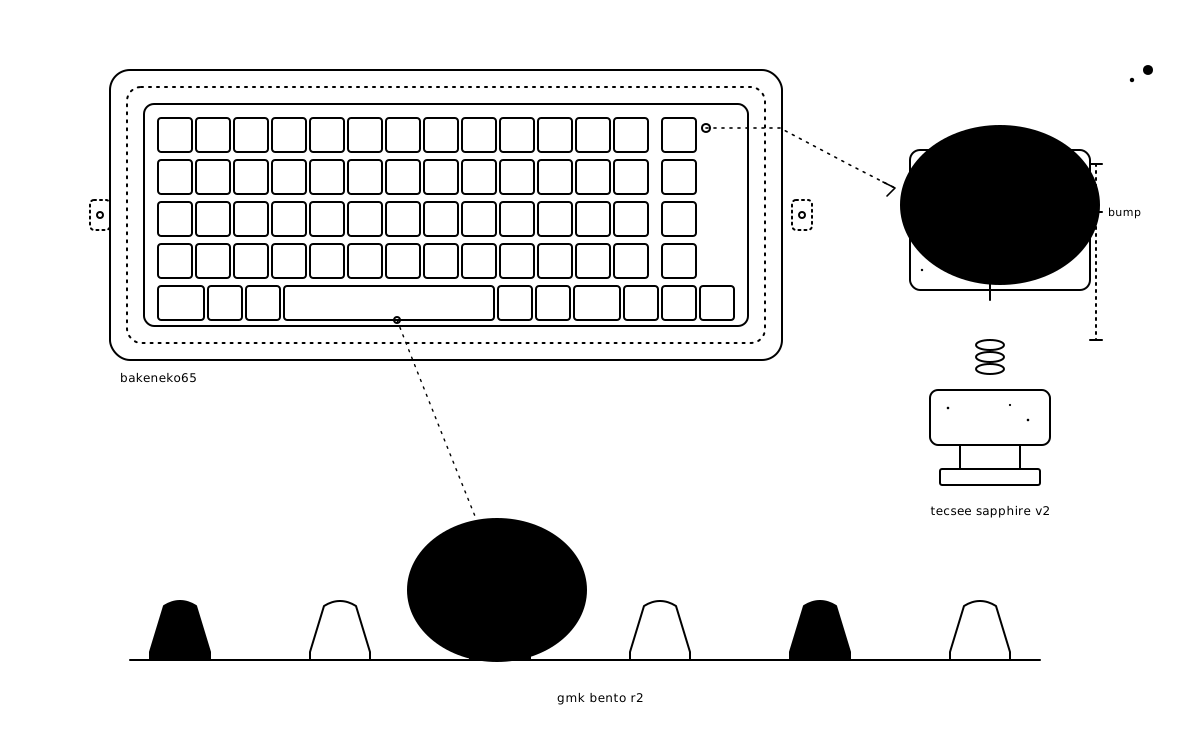
Build of the week: the Bakeneko65 stops being a budget board under GMK Bentō R2 and Tecsee Sapphire V2
A $150 evergreen hotswap board, a sold-out doubleshot ABS set, and a sparkly polycarbonate tactile aren't a mismatch — the cheap part of this build is the entry price, not the result.
thock7 min read
Deep Dives
Why the Drop Holy Panda X feels the way it does
The Holy Panda was a six-month frankenswitch project for most of its life. The Drop Holy Panda X is the first version where the geometry, the spring tune, the housing pairing, and the factory lube were the spec — not the mod.
thock13 min read
Deep Dives
What Cherry's MX2A revision actually changed
Cherry's MX2A landed in 2023 with a real engineering update — factory lube, tighter tolerances, the same 100M-press lifespan. The reason the discourse cooled isn't that the switch failed; it's that the enthusiast slot it aimed at was already claimed by the time it arrived.
thock8 min read
Deep Dives
How HMX took over the mid-tier linear slot
Two years ago HMX was a name on a vendor page nobody pronounced confidently. In W19, the Cloud sat second among switches on our tracker and landed in half the $120 prebuilts the scene argues about. The rise wasn't an accident.
thock13 min read
Trends
How Hall-effect quietly became the new mid-premium default
The polling-rate hype is loud and easy to wave off — 8K, 32K, numbers chasing each other up the spec sheet. The quieter story is that the magnetic-switch tier has stopped being a Wooting-shaped niche and has settled into the $100–$230 prebuilt slot the scene actually buys from. The volume has moved, not just the marketing.
thock7 min read
Guides
Switch housings, compared: nylon, polycarbonate, POM, and the rest
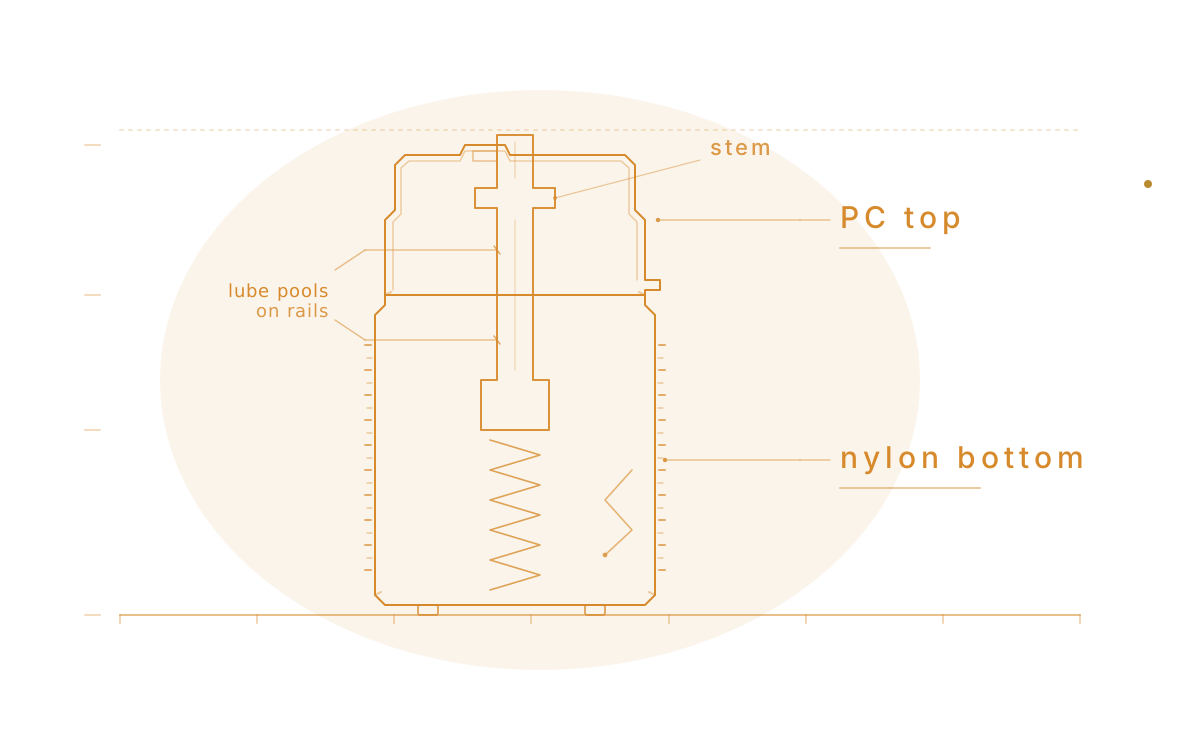
The housing line on a switch spec sheet is the second-most-important thing about a switch, after the type, and most buyers skim past it. Material decides how the switch rings, how the stem rails feel under a finger, and how much grace it gives a bad lube job. A 'PC top, nylon bottom' tag is doing more work than its three words suggest.
thock10 min read
Tecsee Sapphire V2 appears in editor-curated build sheets.