How to evaluate a group buy before you pay
A group buy asks for money today and a keyboard, keycap set, or switch run sometime next year. Here's how to read a listing, a vendor, and a timeline before that bet turns into a long, silent wait.
Most retail purchases resolve in days. A group buy resolves in months, sometimes well over a year, and the money leaves a buyer's account at the start of that window rather than the end. That's not a flaw in the system — it's the system working as designed — but it does mean the usual instincts for judging an online purchase don't transfer cleanly. A slick product render and a countdown timer say nothing about whether the thing arrives on anything like the stated schedule.
This guide is about the judgment calls that happen before checkout: who's running the buy, what the timeline is actually saying, why the same listing can ship faster through one vendor than another, and what recourse exists if any of it goes sideways.
Why a group buy isn't a normal purchase
A group buy exists because the economics of small-batch keyboard hardware don't work the other way around. Injection-molding a keycap set, tooling a switch housing, or anodizing an aluminum case all carry real minimum-order quantities and real upfront tooling costs. A vendor offering a boutique colorway or a niche layout can't responsibly manufacture a few hundred units on spec and hope they sell — so the buy collects payment first, confirms demand is real, and only then commits to the manufacturing run. The buyer is, functionally, pre-financing the factory order.
That structure is why the hobby runs this way, and it also means a buyer's money sits inside a supply chain for the entire wait, with no physical product to point to in the meantime. Every other judgment in this guide follows from that one fact: there's nothing to inspect, so the only things worth evaluating are the people running the buy and the information they share while it's in flight.
Check the runner before the render
The render on a group-buy listing is produced by the same vendor making every other claim on the page, which makes it the least informative part of the listing. The more useful question is almost never asked out loud: has this specific vendor, or this specific group-buy runner, shipped a buy like this one before, and did it land close to the stated window?
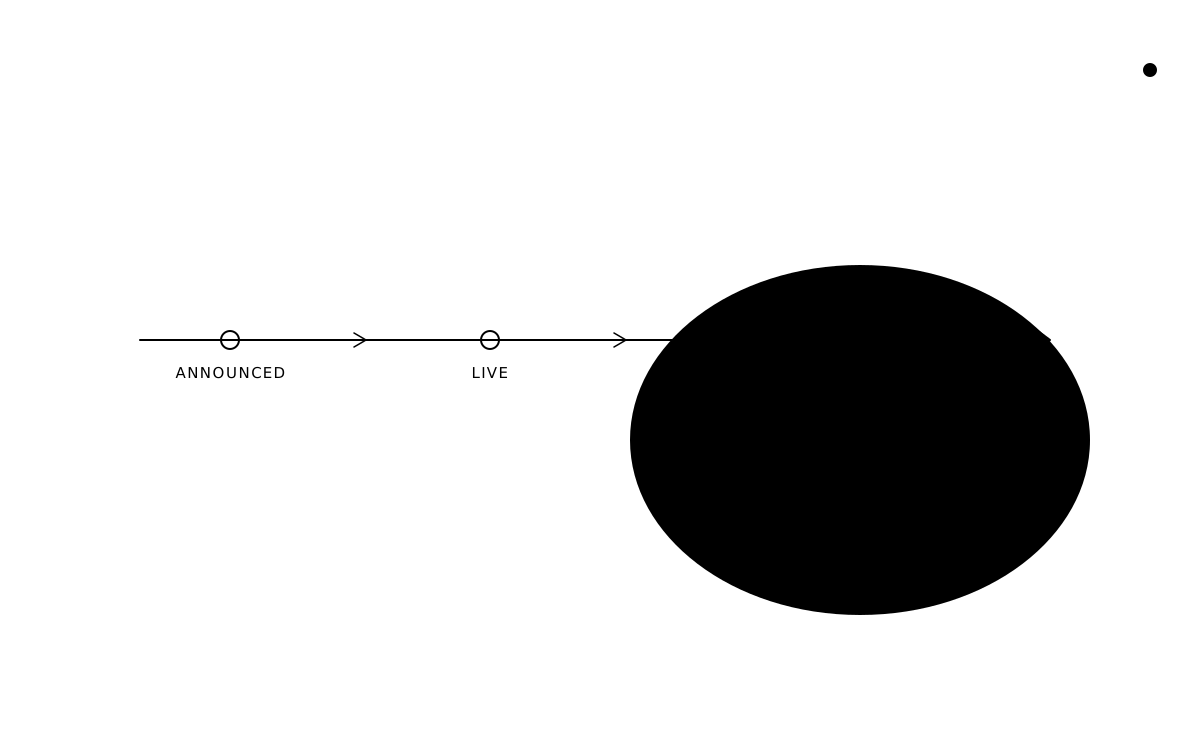
A vendor's prior run history is the closest thing this hobby has to a credit score. Thock's own group buys page carries this history in plain sight — a listing's status badge moves through a known lifecycle, and a vendor's archive on the vendor directory shows whether prior runs actually closed out and shipped, or are still sitting stalled months past their estimate. A vendor with a long run of buys that moved cleanly from live to closed to shipped is a meaningfully different bet than one with no public track record, even if the two listings look identical on the page.
This is also why interest checks exist as their own step before a real group buy opens. A runner who takes the time to gauge demand publicly, over weeks, before committing to a production order is giving buyers a longer visible paper trail to judge than one who opens a buy cold. It's not a guarantee — a first-time runner has to start somewhere — but a buyer weighing a first-time runner's buy against an established vendor's should treat that difference as real information, not noise.
Reading the timeline for red flags
Every group-buy listing states an estimated shipping window, and the quality of that estimate is one of the most legible signals available before paying. A specific, bounded estimate — a quarter and a year, tied to a stated manufacturing step — is a different kind of claim than a vague "when it's ready." Vague timelines aren't automatically dishonest; manufacturing genuinely slips. What matters is whether the vendor is willing to put a number on the page at all, and whether that number gets updated with a reason attached when it moves.
Silence during production is the harder red flag to catch, because it's defined by an absence rather than a statement. A buy that goes quiet for months after closing — no factory photos, no QC update, no revised date — isn't necessarily in trouble, but it's giving a backer nothing to evaluate until the day it ships or doesn't. The healthier pattern looks almost boring: periodic, modest updates, even when the news is "still on track" or "slipped three weeks over a tooling issue." A delayed status with a dated, sourced explanation is a far better sign than a listing that never updates and leaves the buyer to guess.
One factory run, many checkout counters
One mechanic trips up newer buyers specifically: the same group buy can run through several different vendors at once, each handling a different region, and each operating on its own effective timeline even though the underlying product comes from a single factory order.
GMK CYL Ramune is a clean real-world illustration of how this works. The set's own run was a single global group buy, but it sold through ten simultaneous regional storefronts rather than one checkout — Divinikey handling the US, Prototypist the UK, Geonworks Korea, Yushakobo Japan, and six more regional vendors beyond those, all feeding the same production order. KBDfans hosted the buy itself, with fulfillment for the whole run eventually routed through GMK's own distribution in Germany.
That fan-out — one factory run feeding many regional checkouts — is normal for keycap sets specifically, since shipping a finished product internationally after the fact is slower and pricier than kitting regional inventory before it crosses a border. The consequence: two people backing the "same" group buy through two different regional vendors can see different ship dates, different customs handling, and sometimes a different final QC pass, because each regional leg is its own logistics chain stacked on a shared production run. Before paying, confirm which regional vendor is actually handling the order and read that vendor's own shipping notes rather than assuming every checkout on the listing behaves identically.
What "refund policy" actually means in this hobby
The honest answer, most of the time, is less than buyers assume. A group buy is not an escrow service and rarely runs through one — money collected at checkout typically becomes the vendor's working capital for the manufacturing order immediately, not funds held in trust until delivery. That changes what "refund" means if a buy stalls: at best it's a vendor voluntarily returning uncommitted funds; at worst, once tooling and materials are paid for, there may be nothing left to refund even if the vendor wants to.
Payment method matters more here than in almost any other online purchase. A credit card or PayPal's goods-and-services option preserves a chargeback path if a vendor goes dark — a real, if blunt, backstop. A direct bank transfer or crypto payment, both accepted by some vendors for lower processing fees, removes that backstop entirely; once the money moves, there's no third party left to appeal to. Neither method is automatically unsafe, but one of them leaves the buyer carrying the full counterparty risk alone.
A written cancellation and refund policy, stated before checkout rather than improvised after a problem, is the other half of this. "Refunds handled case by case" is not a policy; it's the absence of one, decided after the fact by whoever is reading the support inbox that week.
The checklist
Run through this before paying into any buy that's new to a buyer:
- Look up the runner's prior buys. Check thock's group-buys archive or the vendor's own page for past runs, and see whether they moved cleanly from live to closed to shipped.
- Read the ETA as a claim, not a formality. A specific, bounded window tied to a manufacturing step is stronger than "TBD" or "when it's ready."
- Confirm which regional vendor is actually fulfilling the order, if the buy runs through more than one storefront, and read that vendor's shipping notes specifically.
- Find the refund and cancellation policy before paying, not after something goes wrong. If it isn't written down anywhere, assume there isn't one.
- Check the payment method for a chargeback path. Card or PayPal goods-and-services preserves one; direct bank transfer and crypto generally don't.
- Watch for update cadence, not just update content. A quiet listing for months is a weaker signal than a delayed listing with a dated explanation attached.
What to watch for next
None of this converts a group buy into a risk-free purchase, and it isn't meant to — the structure that makes boutique keyboard hardware possible at all is the same structure that puts a buyer's money at risk for months at a stretch. What a buyer can control is how much information they gather before that money moves: a runner's track record, a timeline's specificity, which regional vendor is actually fulfilling the order, and a refund policy that exists in writing rather than in good faith. The pattern worth watching is whether more runners start publishing update cadence and regional-kitting details on the listing itself, up front, rather than leaving buyers to piece it together from vendor forums after they've already paid. The buys that do that consistently are the ones worth treating as the new baseline for a trustworthy listing.
Build sheet
Keep reading
- Guides
Low-profile mechanical keyboards: a buying guide
A low-profile board promises a flatter desk and a laptop-like feel, but it also quietly opts a buyer out of most of the keycap and switch catalog they already know. Here's what actually changes, and how to tell if the trade is worth it.
thock8 min read - Guides
Artisan keycaps: a practical buying guide
A single sculpted cap on the Escape key can cost more than the switches underneath it, and the buying process looks nothing like ordering a keycap set. Here is what an artisan actually is, how the raffles work, and the one check that keeps a buyer from winning a cap their board can't use.
thock9 min read - Guides
What a switch's gram number actually tells you before you buy
Every switch spec sheet carries two gram numbers — actuation and bottom-out — and treating them as one number is the most common mistake in a first switch purchase. Here's what each one measures, what ranges actually suit typing versus gaming, and why the same number can feel completely different depending on switch type.
thock8 min read - Guides
Wireless keyboard buying guide: Bluetooth, 2.4GHz, and the latency that actually matters
"Wireless" on a spec sheet hides three different radios with three different latency numbers, battery habits, and ways to lose the thing. Here's how to pick the one that matches an actual desk instead of a marketing slide.
thock9 min read