loading · tag
Archive
Every #wireless piece
Guides
Wireless keyboard buying guide: Bluetooth, 2.4GHz, and the latency that actually matters
"Wireless" on a spec sheet hides three different radios with three different latency numbers, battery habits, and ways to lose the thing. Here's how to pick the one that matches an actual desk instead of a marketing slide.
thock9 min read
Guides
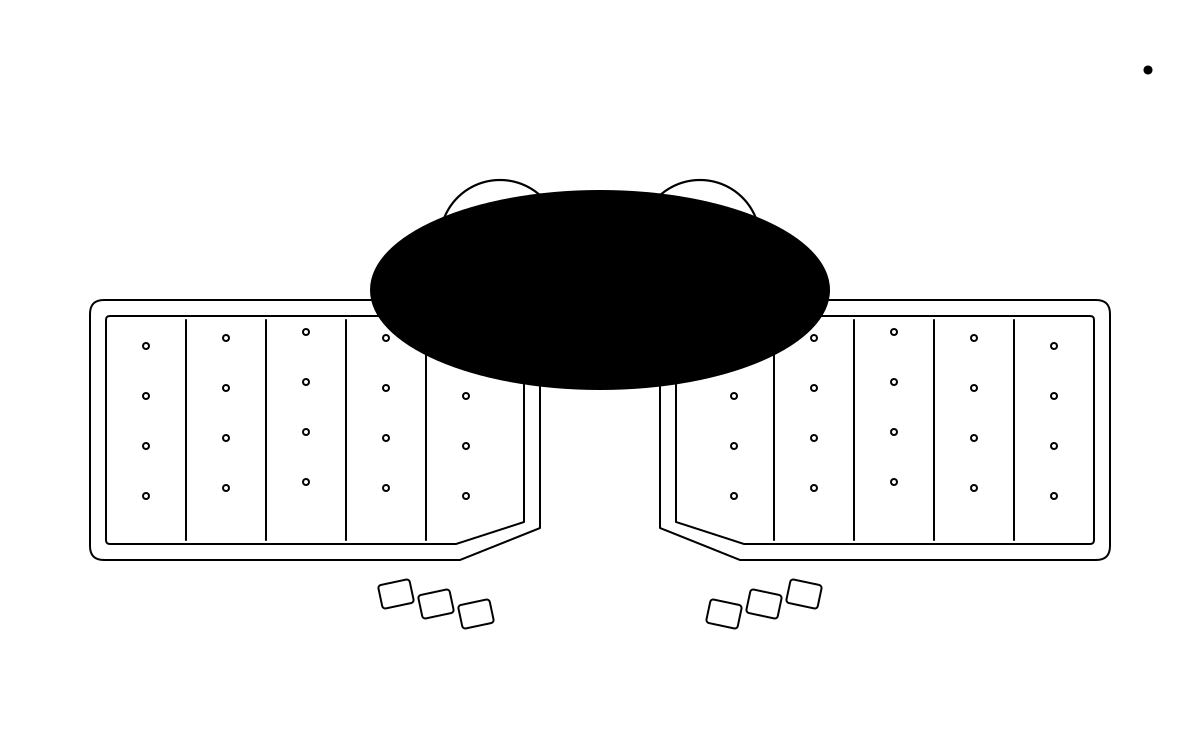
ZMK for wireless and split builds: a practical guide
QMK answers almost every firmware question on a wired board. Add a battery and a second half, and the honest answer changes — this is the guide for the builder standing at that fork.
thock10 min read
Trends
ZMK is becoming the wireless default for premium prebuilts
A five-board flagship lineup running ZMK isn't a niche move; it's a market signal that an open-source firmware that lived in DIY-wireless territory for half a decade has crossed into mainstream-prebuilt anchor status. The vendor side has finally caught up with where the cohort already was.
thock9 min read

Guides
Split and ergonomic keyboards: a buyer's guide
Split doesn't automatically mean ergonomic, and ergonomic doesn't automatically mean split. Before spending money on either, a reader needs to know which of four separate design choices they're actually buying — and which one of them is solving their problem.
thock9 min read
Trends
Keychron's Quiet Takeover: How One Brand Became the Mechanical Keyboard Default
Ask almost anyone — a forum regular, a YouTube comment section, a Discord server for people who just bought their first mechanical keyboard — what board to get, and you'll hear the same answer. This is how that happened.
thock10 min read
News
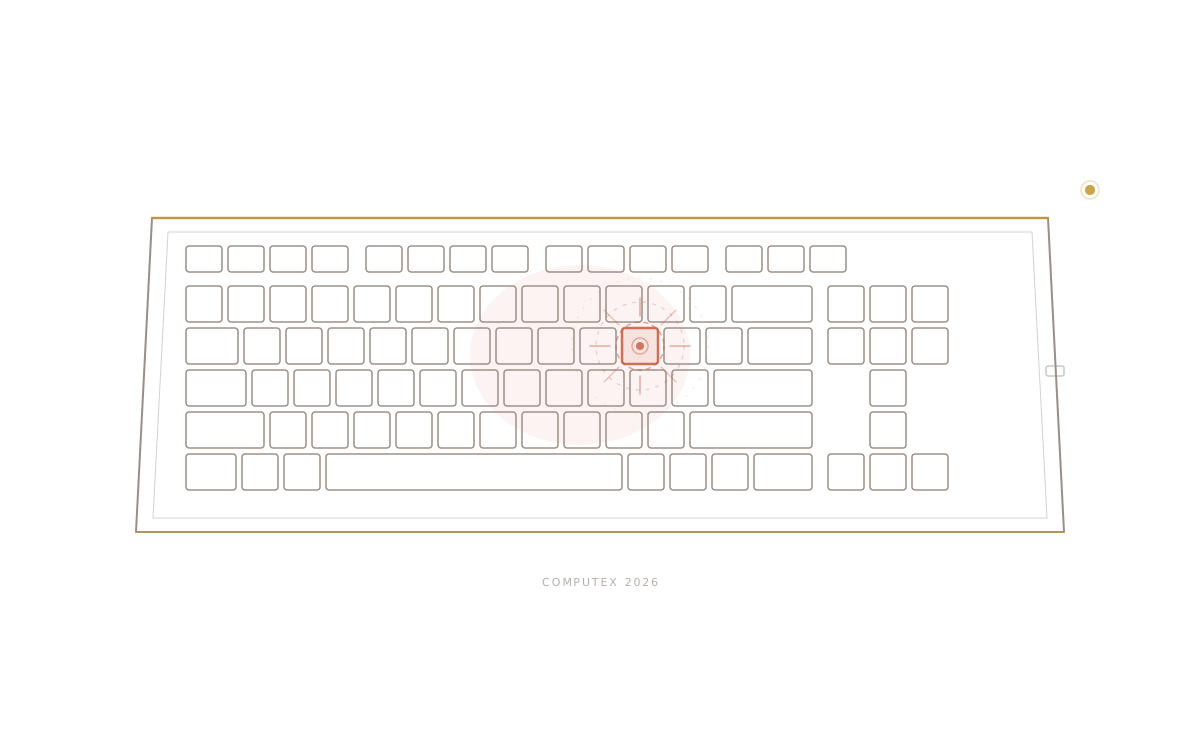
Computex 2026: hall-effect keyboards enter the enthusiast conversation
Computex 2026 (May 20–24) was the week hall-effect stopped being a gaming-peripheral curiosity and walked into the same room as enthusiast-grade chassis. Two boards made that argument concrete.
thock8 min read
News
Keychron's Q Ultra ZMK series brings 660h battery to the prebuilt-premium tier
Keychron used CES 2026 to announce the Q Ultra line — five prebuilts (Q1, Q2, Q3, Q5, Q6) running ZMK rather than QMK/VIA. The 660h battery claim is the headline; the firmware swap is the actual story.
thock4 min read