loading · tag
Archive
Every #trends-2026 piece
News
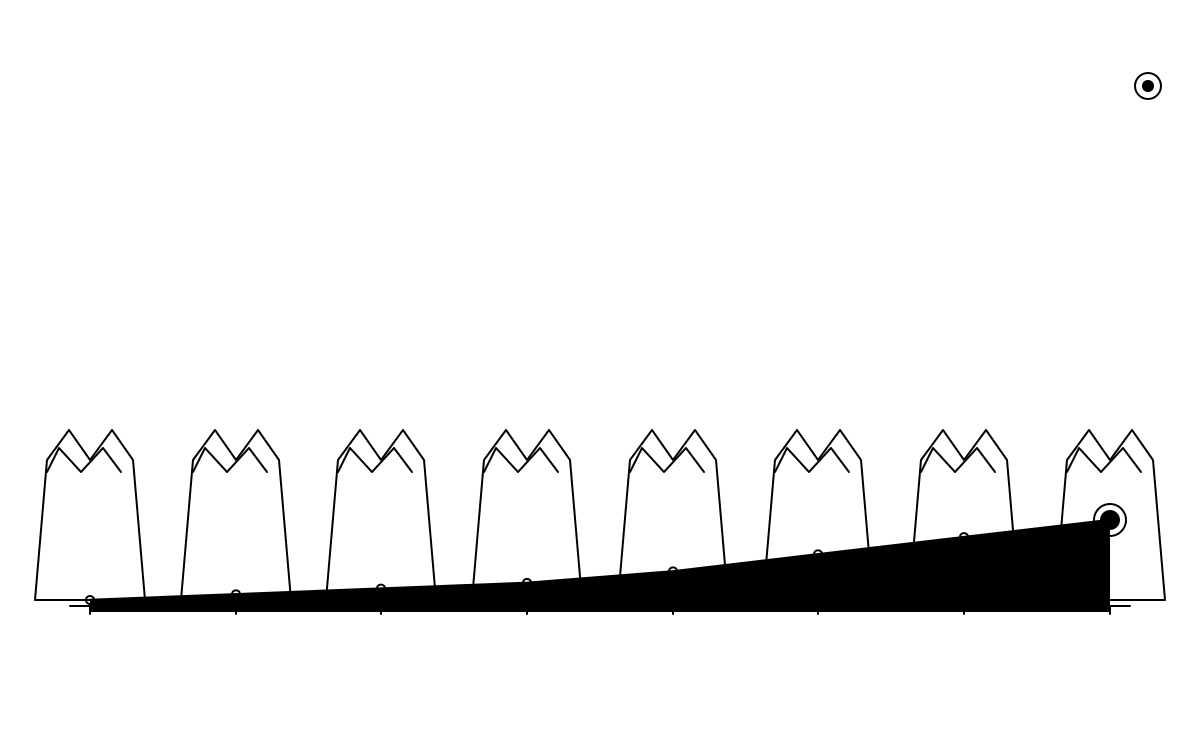
GMK CYL Zombie's group buy, open through October 31, is already thock's steepest Halloween climb
GMK CYL Zombie, a Halloween-themed colorway running jointly through KBDfans and KeyAtlas from October 2 through October 31, 2026, has climbed to a score of 70 on thock's 2026-W42 trends tracker off an eight-week spark trail that hasn't flattened once. The buy is roughly a third of the way through its run, not winding down.
thock6 min read

Trends
GMK CYL Red Devils is back after six years — and it's climbing the tracker faster than most first runs
GMK CYL Red Devils returns after six years for a second run, open Sept 14–Oct 10, 2026 via Omnitype and Keebz N Cables. The thock trends tracker has it up to a score of 68 off one of the steepest eight-week climbs of the season — and the buyer base behind that climb looks nothing like the one that bought the original.
thock7 min read
Trends
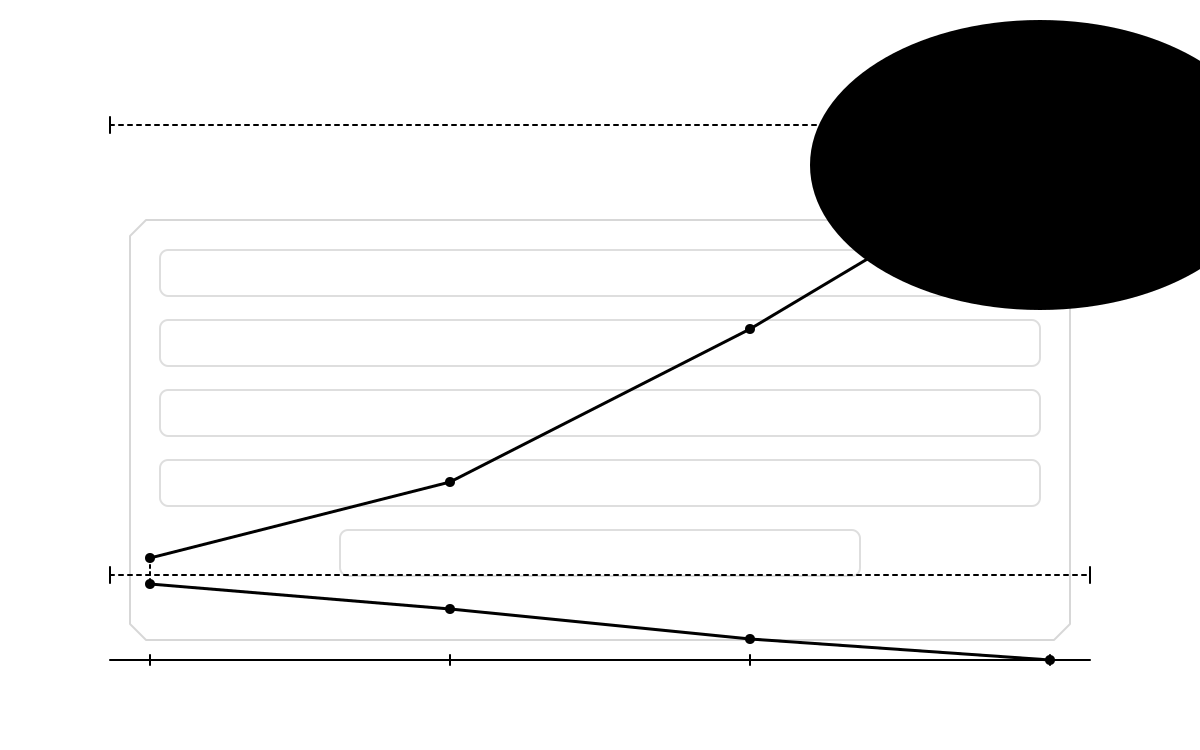
Cherry's tracker slide continues. Keychron's Kickstarter delivered.
Three weeks ago thock closed a piece with two open questions: would Cherry's brand line keep closing the gap toward positive territory, and would Keychron's V6 Ultra HE Kickstarter give the tracker something new to climb on. Both questions have answers now, and they point in opposite directions for a related reason.
thock7 min read
Trends
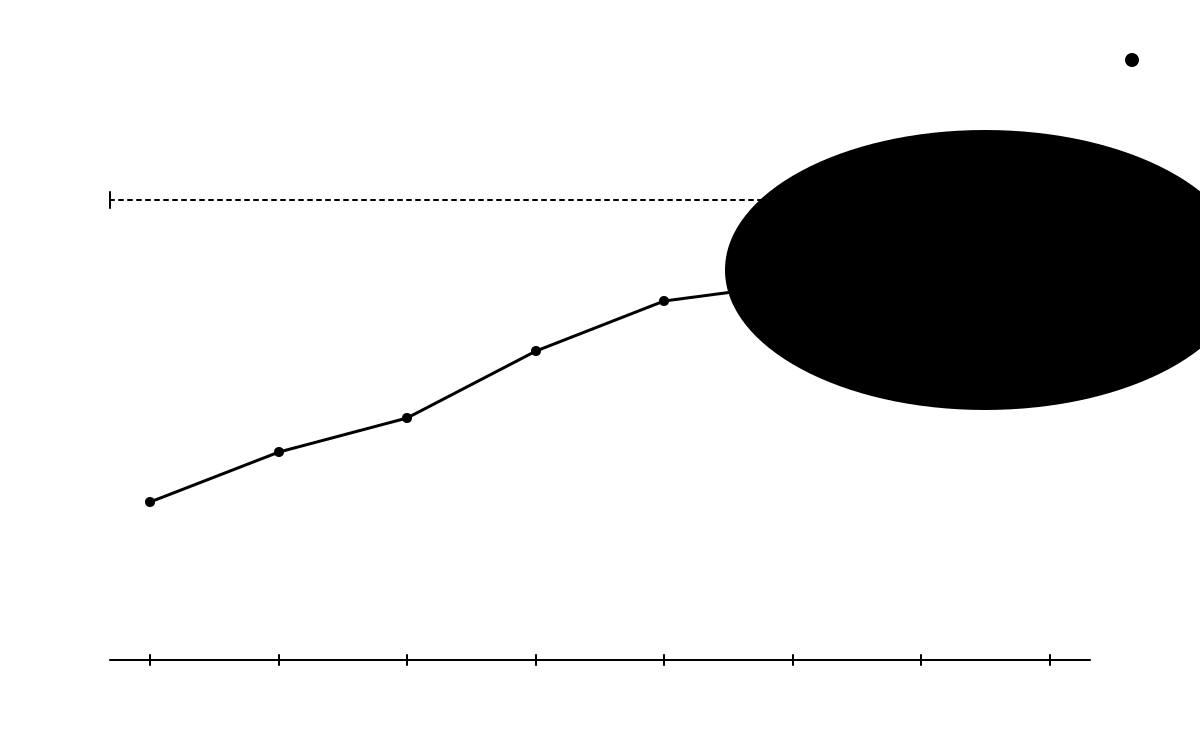
Hall-effect stopped climbing. That's not the same as cooling off.
The Hall Effect/Rapid Trigger category has held flat at 97 on thock's trends tracker for two straight weeks, after climbing from 82 in late June. A flat line at the top of the chart looks like fading interest if you're reading it as a stock ticker. Read as a market snapshot, it says something closer to the opposite.
thock6 min read
Trends
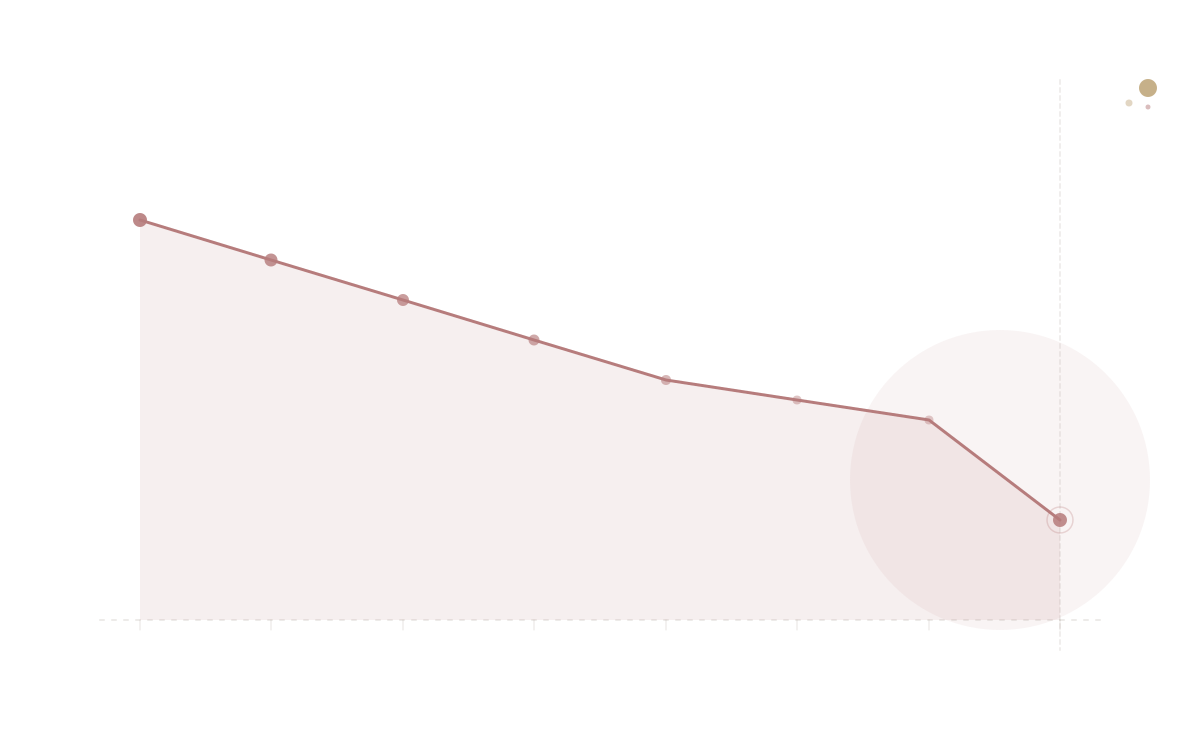
GMK CYL TA Neo's group buy is closed — here's what a November 2026 ship estimate actually means
GMK CYL TA Neo closed its group buy July 17, 2026 after a June 19 open, and the thock trends tracker has logged two straight weeks of cooling attention since. That's not a warning sign — it's what every closed keycap buy looks like while it waits on production.
thock7 min read

Trends
Prototypist and the multi-project vendor model
Prototypist rarely carries just one thing at a time. The UK vendor's tracker signal has spent 2026 rising and falling with how many group buys it's running at once — and in July 2026 it's climbing again on the strength of its own pipeline rather than someone else's.
thock6 min read
Trends
Nova Socket: Keychron's bet on not choosing a switch technology
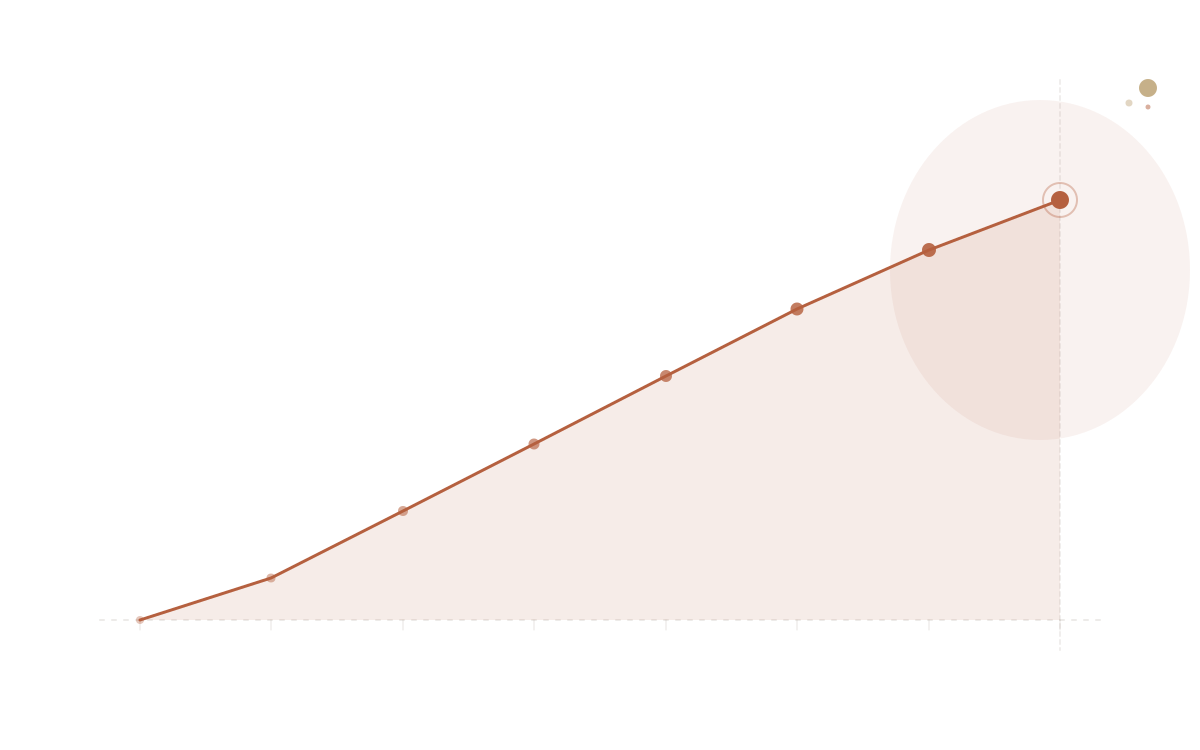
A single hot-swap socket that accepts a standard mechanical switch or a TMR magnetic switch, decided per key, is a strange thing for a mainstream prebuilt brand to ship. It's also exactly the move Keychron has been building toward all year.
thock8 min read
Trends
GMK CYL OG Extensions climbed eight interest-check weeks, then opened a group buy of its own
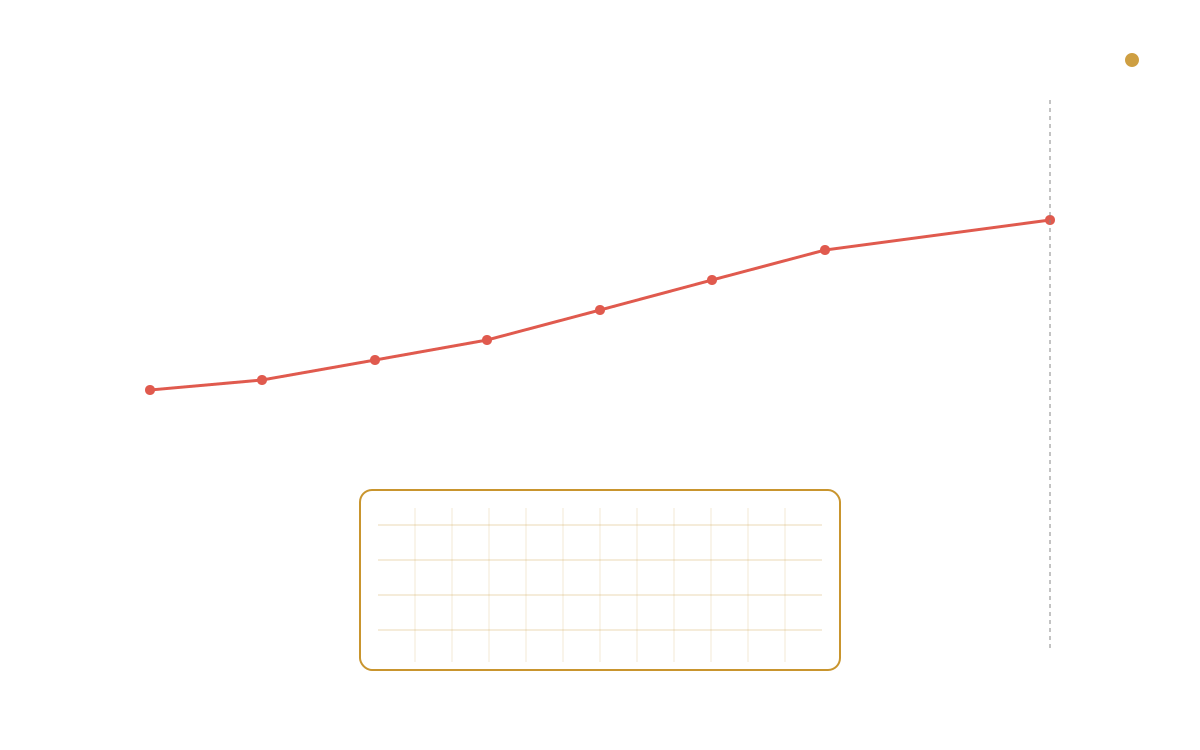
An interest check posted on Geekhack pulled ahead of both open GMK CYL group buys on the thock trends tracker — eight straight weekly reads without a single flat week — before opening a group buy of its own that has kept climbing since.
thock7 min read
Trends
Gaming Boards Are Winning the Spec War, and Enthusiasts Are Paying Attention
Hall-effect sensors and Rapid Trigger have done what RGB lighting and polling-rate marketing never could: closed the spec gap between gaming keyboards and enthusiast builds at the hardware layer. The divide persists in culture and community, but at the switch and firmware level, the lines are dissolving.
thock8 min read
News
Computex 2026: hall-effect keyboards enter the enthusiast conversation
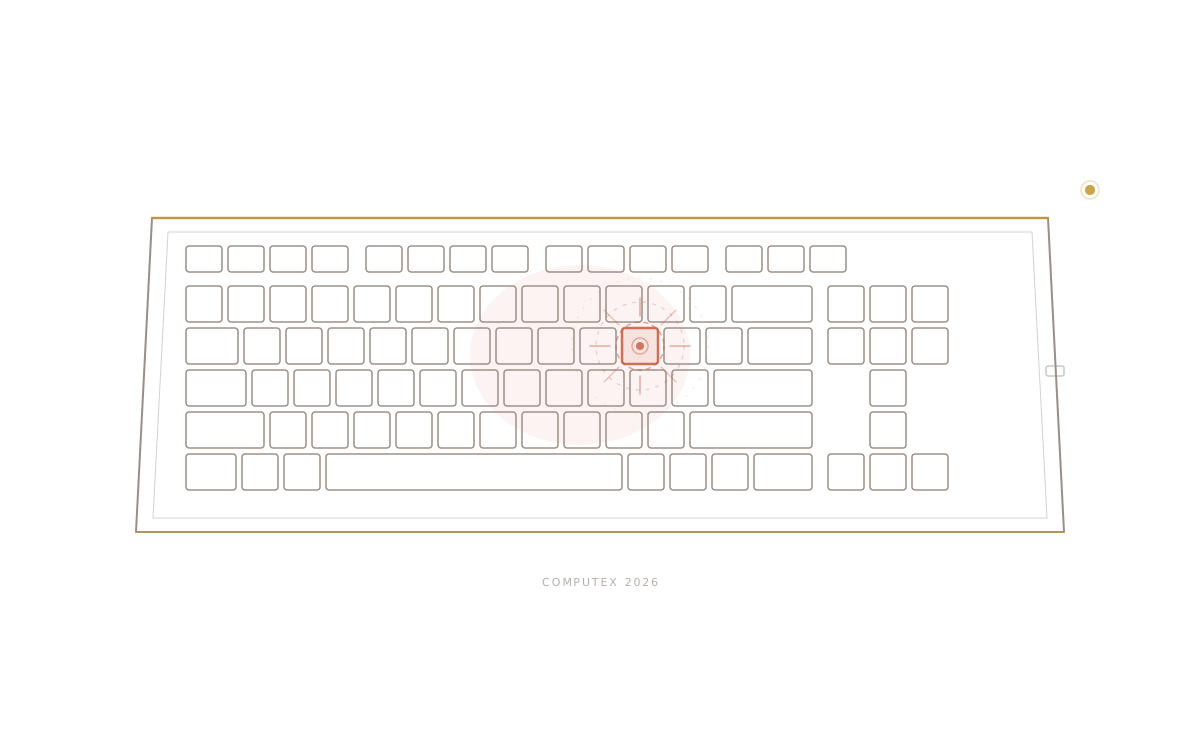
Computex 2026 (May 20–24) was the week hall-effect stopped being a gaming-peripheral curiosity and walked into the same room as enthusiast-grade chassis. Two boards made that argument concrete.
thock8 min read
Trends
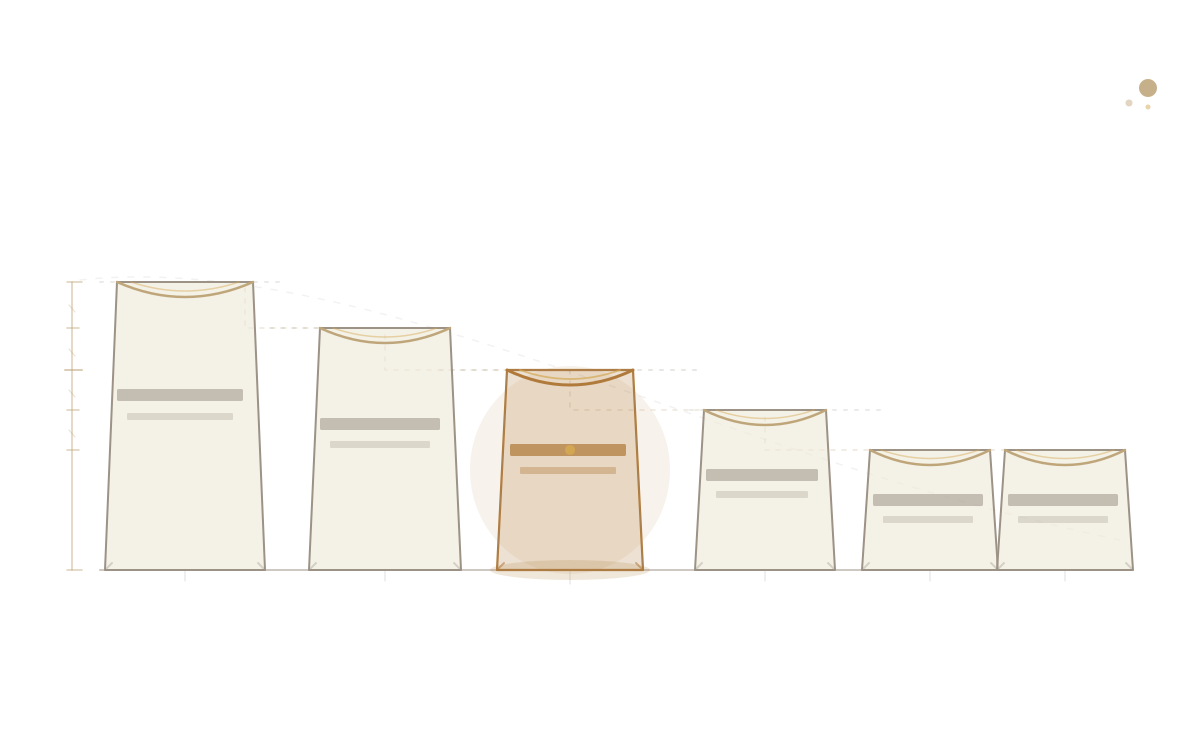
DCS Grass Valley closes: what the profile's 2026 run tells us
Grass Valley's group buy closed 2026-06-01 and the tracker dropped -18 that same week — but DCS Dolch opened the same day at +29. The momentum didn't dissipate; it transferred.
thock9 min read
Trends
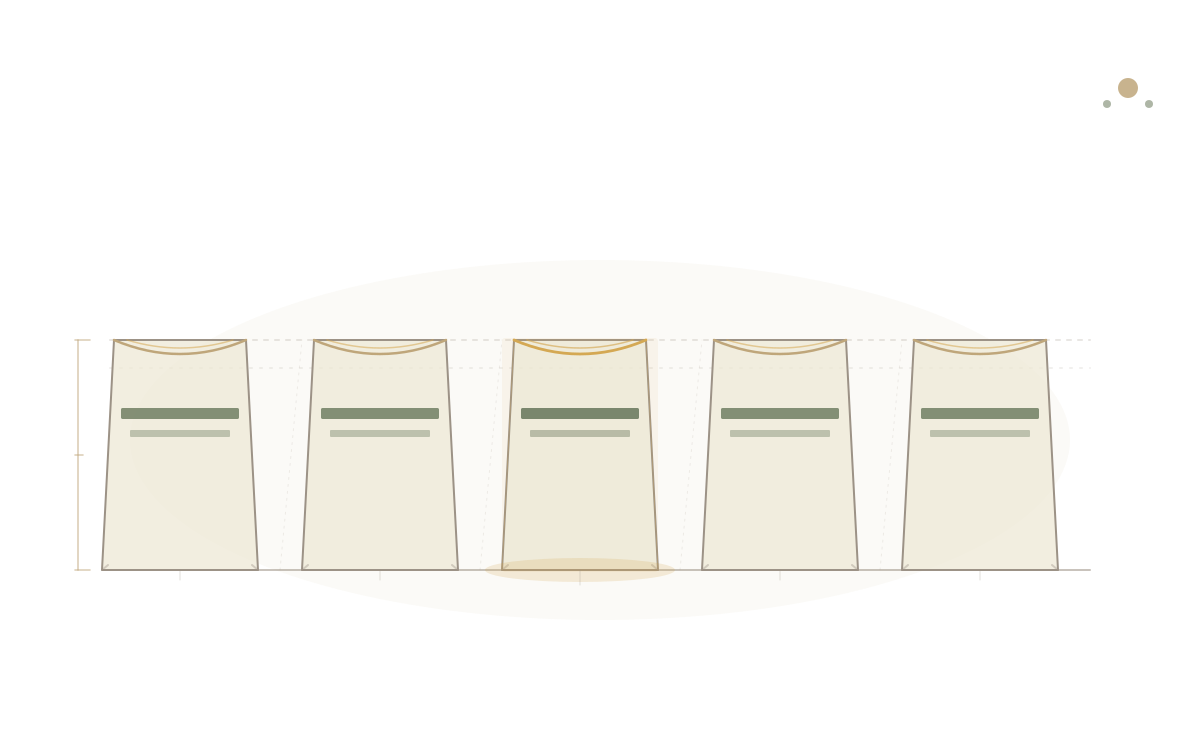
DCS Olivetti and the quiet rebellion against Cherry orthodoxy
A March group buy closed strong, and eight weeks of steady tracker movement later, DCS Olivetti is the clearest sign that experienced builders are ready to argue about profile again.
thock8 min read
Deep Dives
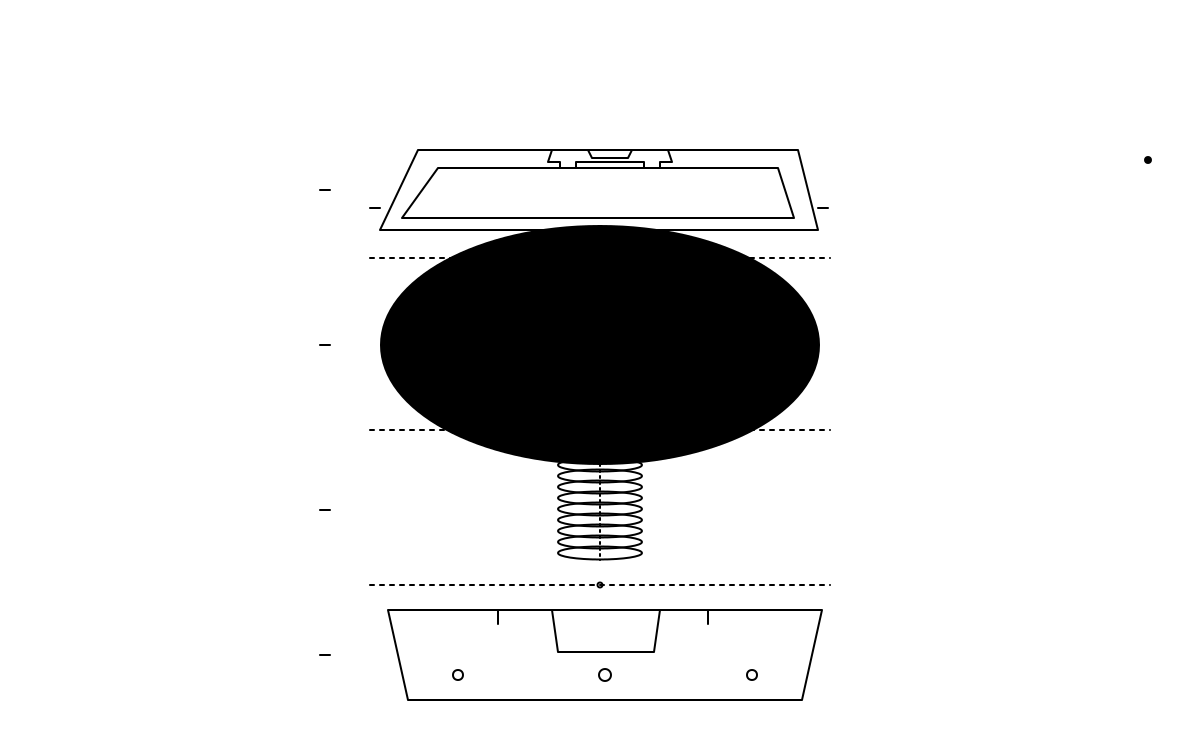
How HMX took over the mid-tier linear slot
Two years ago HMX was a name on a vendor page nobody pronounced confidently. In W19, the Cloud sat second among switches on our tracker and landed in half the $120 prebuilts the scene argues about. The rise wasn't an accident.
thock13 min read

Trends
When customs became vendor-first
From 2018 through 2022 the typical custom shipped through one host vendor and a fan of regional proxies; by 2026 the baseline custom is a configurator on a vendor's own storefront. Boards moved. Keycap group buys mostly didn't.
thock6 min read

Trends
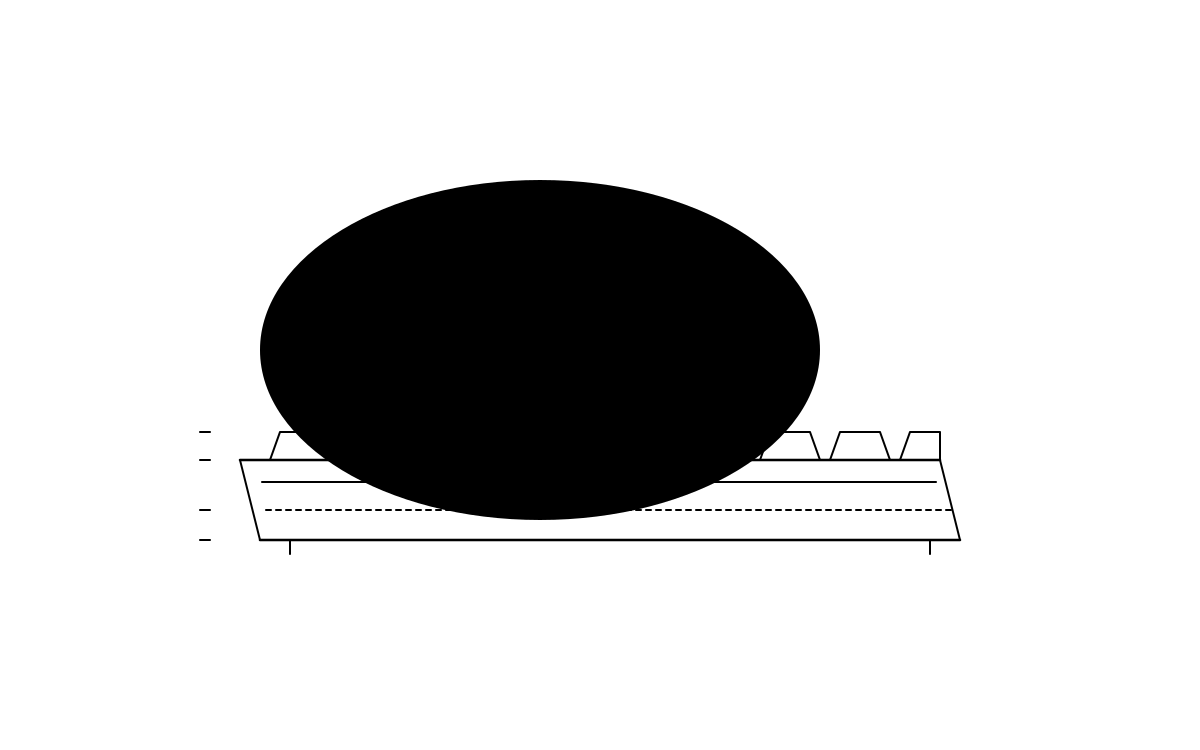
The split/ergo cohort grew up
Split and ergonomic boards spent a decade as a hobbyist sub-cohort orbiting a stagger-majority. By 2026 the Voyager line, the Glove80, and a steady trickle of r/mk transition posts have pushed split/ergo across a visibility threshold — still a minority, but now a reference category instead of a footnote.
thock5 min read
Trends
How 'thock' became an acoustic spec, not an accident
A decade ago a thocky board was the win condition of a $300 custom — the payoff for the right switches, the right lube job, the right patience. In 2026 the same sound is table-stakes for a $150 prebuilt: factory-lubed switches, silicone dampening, gasket-mounted plates, PBT doubleshot. The stack that used to be enthusiast-only is now what mid-tier vendors design toward from day one.
thock8 min read

Trends
How 75 percent became the default custom layout
Two years ago a custom-board recommendation defaulted to 65% with a polite note about 75% as the next step up. The KBD75 v3's staying power as a default recommendation, the QK75, and a crowded mid-tier have flipped that order. 75% is now the layout customs reach for first.
thock5 min read
Trends
How Hall-effect quietly became the new mid-premium default
The polling-rate hype is loud and easy to wave off — 8K, 32K, numbers chasing each other up the spec sheet. The quieter story is that the magnetic-switch tier has stopped being a Wooting-shaped niche and has settled into the $100–$230 prebuilt slot the scene actually buys from. The volume has moved, not just the marketing.
thock7 min read
Trends
ZMK is becoming the wireless default for premium prebuilts
A five-board flagship lineup running ZMK isn't a niche move; it's a market signal that an open-source firmware that lived in DIY-wireless territory for half a decade has crossed into mainstream-prebuilt anchor status. The vendor side has finally caught up with where the cohort already was.
thock9 min read