loading · tag
Archive
Every #keychron piece
News
Keychron launches Q16 HE 8K with ceramic-TMR magnetic switches
Keychron's Q-series just picked up a Kickstarter campaign, a ceramic-housed TMR magnetic switch, and an 8000Hz polling claim in one launch. It's the brand's first bet on tunnel-magnetoresistance sensing rather than the Hall-effect tech it already made the category default.
thock6 min read
Trends
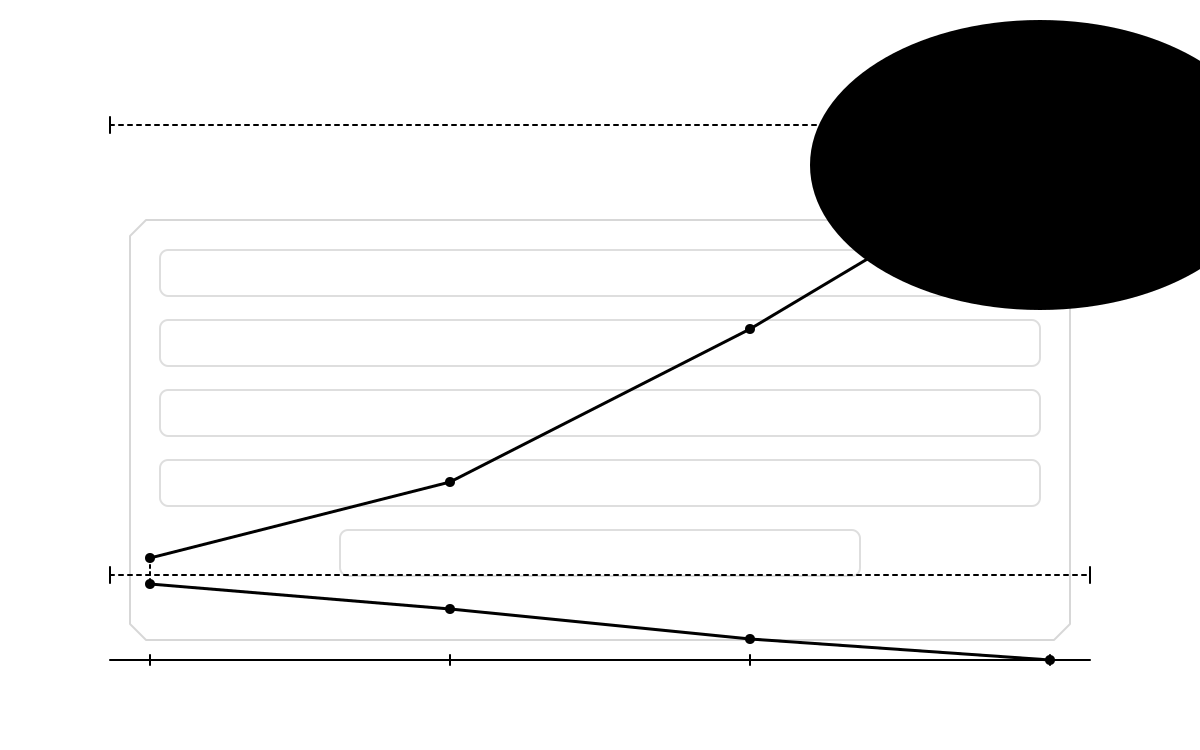
Cherry's tracker slide continues. Keychron's Kickstarter delivered.
Three weeks ago thock closed a piece with two open questions: would Cherry's brand line keep closing the gap toward positive territory, and would Keychron's V6 Ultra HE Kickstarter give the tracker something new to climb on. Both questions have answers now, and they point in opposite directions for a related reason.
thock7 min read
Trends
Nova Socket: Keychron's bet on not choosing a switch technology
A single hot-swap socket that accepts a standard mechanical switch or a TMR magnetic switch, decided per key, is a strange thing for a mainstream prebuilt brand to ship. It's also exactly the move Keychron has been building toward all year.
thock8 min read
Trends
Keychron's Quiet Takeover: How One Brand Became the Mechanical Keyboard Default
Ask almost anyone — a forum regular, a YouTube comment section, a Discord server for people who just bought their first mechanical keyboard — what board to get, and you'll hear the same answer. This is how that happened.
thock10 min read
News
Keychron's Q Ultra ZMK series brings 660h battery to the prebuilt-premium tier
Keychron used CES 2026 to announce the Q Ultra line — five prebuilts (Q1, Q2, Q3, Q5, Q6) running ZMK rather than QMK/VIA. The 660h battery claim is the headline; the firmware swap is the actual story.
thock4 min read
Trends
TMR is closing the gap on Hall-effect. It hasn't caught it.
TMR switches have climbed every week on thock's trend tracker from W38 through W42 — 55, 63, 71, 85, 90. That's the second-highest score on this week's board, and the gap behind Hall-effect's ceiling has gone from 42 points to 10 in five readings.
thock6 min read
Trends
ZMK is becoming the wireless default for premium prebuilts
A five-board flagship lineup running ZMK isn't a niche move; it's a market signal that an open-source firmware that lived in DIY-wireless territory for half a decade has crossed into mainstream-prebuilt anchor status. The vendor side has finally caught up with where the cohort already was.
thock9 min read